
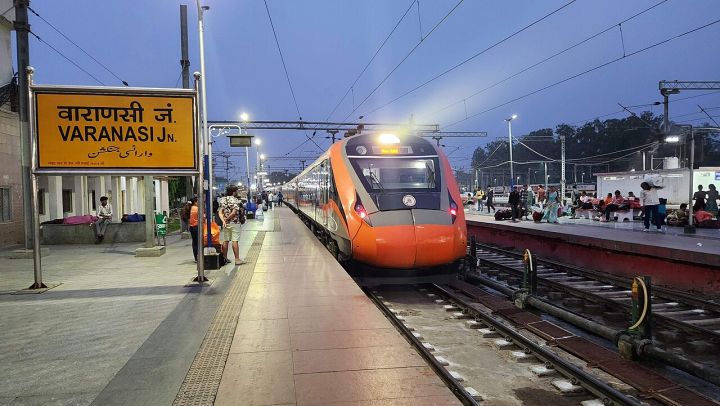
📷 Image: Wikimedia Commons / Benison
Automobile
PM Approves Delhi‑Varanasi Bullet Train, Cutting Travel to 3.5 Hours
✍️ Rediff
🗓 01 Nov 2026, 01:36 AM
👁 19
The prime minister has given the green light to the north‑India high‑speed rail corridor linking Delhi and Varanasi, promising a 3.5‑hour journey between the two cities.
New Delhi – The Union Cabinet, chaired by Prime Minister Narendra Modi, has approved the north‑India bullet‑train corridor that will connect the capital with Varanasi. The high‑speed line is projected to slash the current travel time to just three and a half hours, a significant reduction compared with existing road and rail options.
The approved route forms part of a broader high‑speed rail network envisioned for the northern region, aiming to boost inter‑city connectivity, tourism and economic activity. Officials said the project will employ state‑of‑the‑art rolling stock and infrastructure to ensure speeds exceeding 300 km/h.
While detailed timelines and financing arrangements are still being finalised, the government has signalled its intent to fast‑track construction, citing the corridor’s potential to de‑congest highways and lower carbon emissions. The move aligns with the broader push to modernise India’s transport backbone and position the country among global high‑speed rail adopters.
Stakeholders, including state governments and industry bodies, have welcomed the decision, noting the expected uplift in trade, employment and regional development that a rapid link between Delhi and the historic city of Varanasi could generate.