
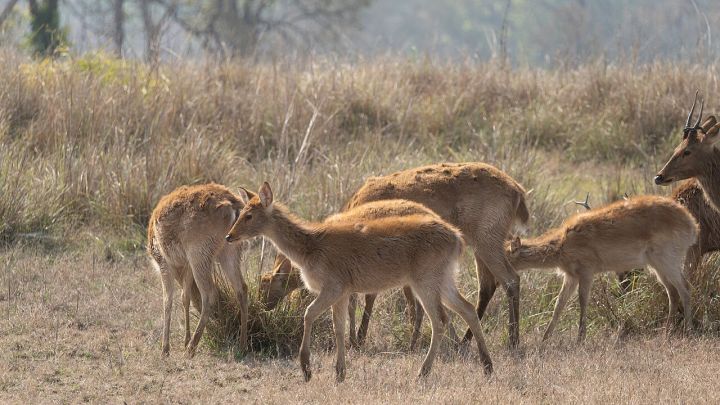
📷 Image: Wikimedia Commons / Kandukuru Nagarjun from Bangalore, India
Science
Barasingha Return to Bandhavgarh Tiger Reserve Marks Century-Long Wait Ended
✍️ Amar Ujala · Madhya Pradesh
🗓 05 Nov 2026, 08:45 AM
👁 16
After nearly a hundred years, 48 barasinghas translocated from Kanha have settled in Bandhavgarh, with the herd now numbering 65 as of May 2026.
The wildlife authorities have successfully reintroduced barasingha, also known as swamp deer, into Bandhavgarh Tiger Reserve after a hiatus of almost a century. Forty‑eight individuals were moved from the neighboring Kanha National Park and released in the reserve’s grassland patches earlier this year.
By May 2026, the population has risen to 65, indicating a healthy adaptation to the new habitat. The increase is attributed to rigorous scientific monitoring, supplemental feeding, and anti‑poaching patrols that safeguard the herd.
Conservation experts view the development as a landmark achievement for Madhya Pradesh’s wildlife management, enhancing biodiversity and restoring a key herbivore that historically roamed the region’s forests.
The project forms part of a broader strategy to balance predator‑prey dynamics within the tiger reserve, aiming to sustain both tiger and ungulate populations for the long term.
Officials plan to continue periodic health checks and habitat assessments to ensure the barasingha’s continued growth and to replicate the model in other protected areas across the country.