
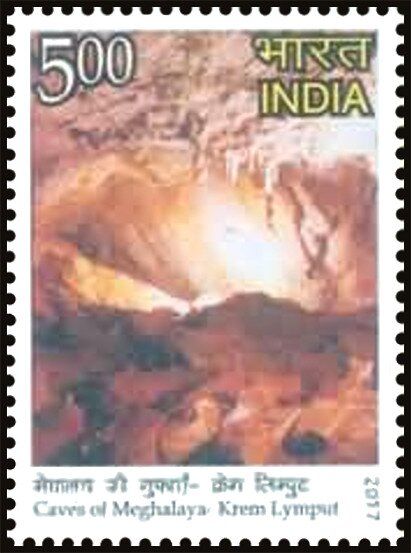
📷 Image: Wikimedia Commons / Post of India
Science
Scientists uncover 6,000-year monsoon record from Meghalaya cave
✍️ The Times of India
🗓 05 Nov 2026, 02:32 AM
👁 6
Researchers have extracted sediment layers from a cave in Meghalaya that reveal continuous monsoon patterns spanning six millennia.
A team of climatologists and geologists has recovered a sequence of sediment deposits from a limestone cave in Meghalaya that records monsoon activity for the past 6,000 years. The cave, located in the Khasi Hills, provided a protected environment where layers of mineral-rich deposits accumulated year after year.
Using radiocarbon dating, stable‑isotope analysis and microscopic examination of pollen and mineral grains, the scientists reconstructed variations in rainfall intensity and seasonality over the Holocene epoch. The data show periods of heightened monsoon strength interspersed with intervals of reduced precipitation, correlating with known global climate events.
The long‑term record is expected to improve regional climate models by supplying a high‑resolution benchmark of past monsoon behaviour. Such insight is crucial for forecasting future rainfall trends, which directly affect agriculture, water resources and disaster preparedness across the Indian subcontinent.
The findings, published in a peer‑reviewed journal, underscore the value of speleothem and cave sediment studies in filling gaps left by instrumental records that extend back only a few decades.