
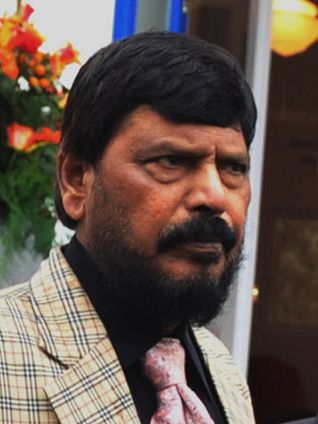
📷 Image: Wikimedia Commons / Prime Minister's Office
Politics
Ramdas Athawale Says Dalit Leaders Will Relinquish Reservations if Casteism Ends
✍️ economictimes.com
🗓 09 Sep 2026, 03:18 PM
👁 32
Dalit leader Ramdas Athawale stated that his community would forgo reservation benefits if caste discrimination were eradicated.
Dalit politician Ramdas Athawale, a Union Minister and head of the Republican Party of India (Athawale), told reporters that his community would be prepared to give up reservation quotas if India could eliminate caste-based discrimination. The comment was made in a recent interview cited by the Economic Times.
Athawale’s statement touches on a long‑standing debate about affirmative action in India, where reservations in education and public employment are seen as a tool to address historic inequities. By linking the continuation of reservations to the eradication of casteism, he signals a conditional willingness to reassess the policy.
Political analysts note that the remark could reshape discussions within the ruling coalition, where reservation policies remain a sensitive issue. While some view the offer as a progressive step toward social integration, others caution that caste biases persist and that reservations still serve as a safeguard for marginalized groups.
The leader did not provide a timeline or specific measures for ending casteism, leaving the practical implications of his proposal open to further debate among policymakers and civil‑society groups.
Athawale’s statement touches on a long‑standing debate about affirmative action in India, where reservations in education and public employment are seen as a tool to address historic inequities. By linking the continuation of reservations to the eradication of casteism, he signals a conditional willingness to reassess the policy.
Political analysts note that the remark could reshape discussions within the ruling coalition, where reservation policies remain a sensitive issue. While some view the offer as a progressive step toward social integration, others caution that caste biases persist and that reservations still serve as a safeguard for marginalized groups.
The leader did not provide a timeline or specific measures for ending casteism, leaving the practical implications of his proposal open to further debate among policymakers and civil‑society groups.