
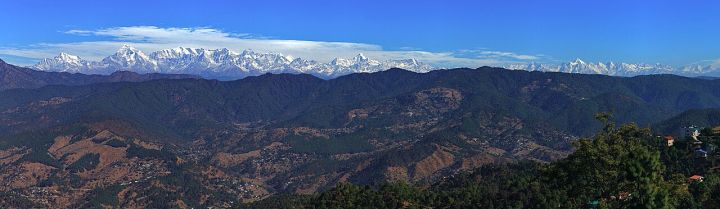
📷 Image: Wikimedia Commons / Original: Harshit SR
Derivative work: Unpetitpro
Weather
Nepal floods trigger warning over glacial‑lake risk in Uttarakhand Himalayas
✍️ The New Indian Express
🗓 29 Aug 2026, 06:05 AM
👁 4
Heavy rains in Nepal have heightened concerns about the stability of glacial lakes in Uttarakhand's fragile Himalayan region, prompting authorities to issue alerts.
Heavy monsoon rains that caused widespread flooding in Nepal have drawn attention to the vulnerability of glacial lakes situated in the Uttarakhand Himalayas. Experts say that rising water levels and accelerated melt could increase the likelihood of a glacial lake outburst flood (GLOF), a phenomenon that can unleash sudden, destructive floods downstream.
State disaster management officials in Uttarakhand have begun monitoring the most precarious lakes and have urged local communities to stay alert. Preliminary assessments indicate that several high‑altitude lakes, fed by rapidly melting glaciers, are showing signs of increased pressure.
The warning follows a series of flood events across the trans‑Himalayan belt, underscoring the interconnected nature of climate‑driven hazards in the region. Authorities are coordinating with meteorological agencies to issue timely advisories and to prepare evacuation plans where necessary.
While no immediate threat has been reported, the situation is being treated with caution, and field teams are slated to conduct detailed surveys in the coming weeks to gauge the exact risk levels.
The development highlights the need for cross‑border cooperation on climate resilience, as water‑related disasters in Nepal can have direct implications for neighboring Indian states such as Uttarakhand.
State disaster management officials in Uttarakhand have begun monitoring the most precarious lakes and have urged local communities to stay alert. Preliminary assessments indicate that several high‑altitude lakes, fed by rapidly melting glaciers, are showing signs of increased pressure.
The warning follows a series of flood events across the trans‑Himalayan belt, underscoring the interconnected nature of climate‑driven hazards in the region. Authorities are coordinating with meteorological agencies to issue timely advisories and to prepare evacuation plans where necessary.
While no immediate threat has been reported, the situation is being treated with caution, and field teams are slated to conduct detailed surveys in the coming weeks to gauge the exact risk levels.
The development highlights the need for cross‑border cooperation on climate resilience, as water‑related disasters in Nepal can have direct implications for neighboring Indian states such as Uttarakhand.