
📷 Image: Wikimedia Commons / NOAA
Weather
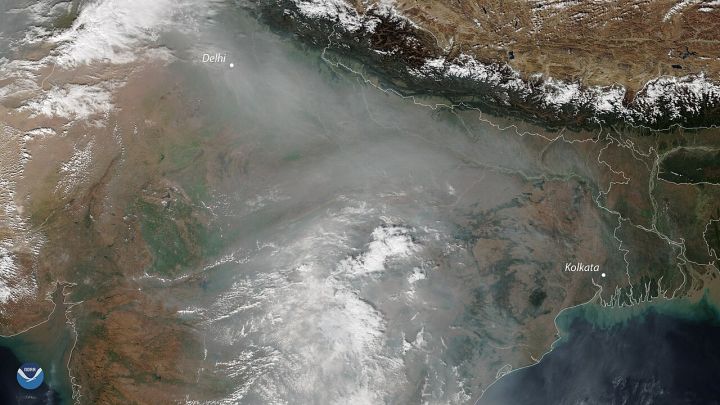
NASA satellite overpass linked to farm fires that fueled Delhi's smog
✍️ Hindustan Times
🗓 03 Nov 2026, 10:16 AM
👁 14
Scientists traced the recent Delhi smog to agricultural fires that were ignited shortly after a NASA satellite passed overhead, according to satellite and ground observations.
A team of atmospheric researchers examined satellite imagery and ground‑level air‑quality data to pinpoint the origin of the dense smog that enveloped Delhi last week. Their analysis showed a sharp rise in fire hotspots across the surrounding agricultural belt within hours of a NASA Earth‑observing satellite completing its overpass.
The timing of the fires suggests a possible link to the satellite's passage, as local reports indicated that some farmers used the brief window of reduced visibility to ignite residue burning. The resulting smoke was quickly drawn into the capital by prevailing wind patterns, exacerbating already poor air quality.
Delhi's pollution monitoring stations recorded a rapid spike in particulate matter (PM2.5) levels, prompting health advisories for residents. Authorities have warned that uncontrolled farm fires remain a major seasonal contributor to the city's winter haze.
While the exact motive behind the timing remains under investigation, officials stress the need for stricter enforcement of crop‑burning bans and greater coordination with satellite monitoring agencies to mitigate future episodes.