
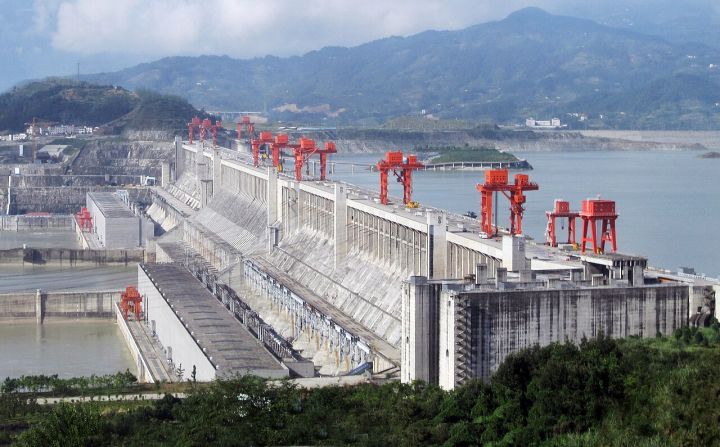
📷 Image: Wikimedia Commons / Source file: Le Grand Portage
Derivative work: Reh
Defence
Experts warn Chinese mega-dam near India could become a ‘ticking bomb’ after Nepal floods
✍️ India Today
🗓 27 Aug 2026, 11:34 AM
👁 6
Security analysts say the newly‑completed Chinese dam on the border poses a flood risk for India, especially after recent devastation in Nepal.
Security experts and hydrology specialists have raised alarms about a massive Chinese dam built close to the India‑China border. They argue that the structure, often described as a "monster dam," could release sudden surges of water if its spillways fail or if extreme rainfall occurs.
The warning comes in the wake of severe flooding in Nepal, where heavy monsoon rains and glacial melt caused widespread devastation. Analysts say the same weather patterns could affect the trans‑Himalayan river systems that flow into India, making the Chinese dam a potential "ticking bomb" for downstream communities.
Indian defence and disaster‑management agencies have been briefed on the risk, and officials are reportedly reviewing flood‑mitigation measures along the vulnerable river basins. No official diplomatic protest has been lodged yet, but the issue is expected to feature in upcoming bilateral security dialogues.
Experts stress that continuous monitoring of water levels and coordinated early‑warning systems between the two neighbours are essential to prevent a humanitarian crisis.
The warning comes in the wake of severe flooding in Nepal, where heavy monsoon rains and glacial melt caused widespread devastation. Analysts say the same weather patterns could affect the trans‑Himalayan river systems that flow into India, making the Chinese dam a potential "ticking bomb" for downstream communities.
Indian defence and disaster‑management agencies have been briefed on the risk, and officials are reportedly reviewing flood‑mitigation measures along the vulnerable river basins. No official diplomatic protest has been lodged yet, but the issue is expected to feature in upcoming bilateral security dialogues.
Experts stress that continuous monitoring of water levels and coordinated early‑warning systems between the two neighbours are essential to prevent a humanitarian crisis.