
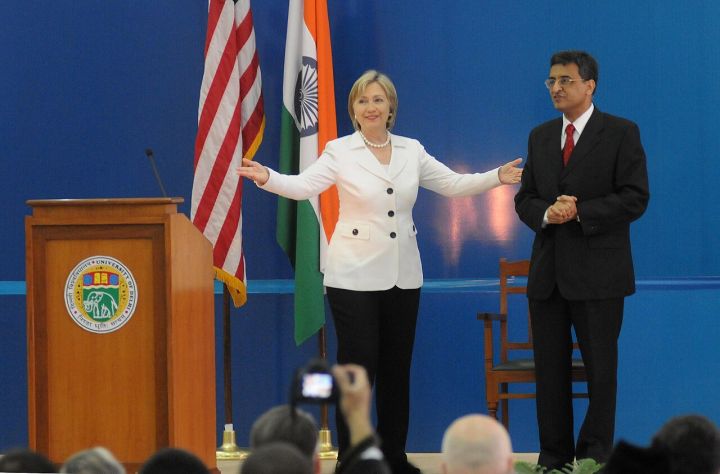
📷 Image: Wikimedia Commons / U.S. Department of State from United States
Politics
Delhi DUSU Elections: NOTA Vote Share Sets New Challenge for Candidates
✍️ Amar Ujala · Delhi
🗓 17 Sep 2026, 06:32 PM
👁 10
In the recent Delhi University Students' Union (DUSU) elections, a significant number of votes cast for NOTA has emerged as a major hurdle for candidates seeking to secure a clear mandate.
The recent elections for the Delhi University Students' Union (DUSU) have highlighted a growing trend in student politics, where the 'None of the Above' (NOTA) option is playing a decisive role. Reports indicate that the number of votes polled for NOTA has been substantial, posing a significant challenge for the winning candidates.
This development underscores a shift in the voting behavior of students, who are increasingly using NOTA to express dissatisfaction or abstain from supporting any specific candidate. For the elected representatives, this means that their mandate is not absolute, as a considerable portion of the student body chose not to back any of the contesting parties.
Political analysts suggest that this high NOTA vote share serves as a warning to student leaders to focus more on substantive issues and student welfare rather than mere electoral politics. The outcome reflects a demand for greater accountability and a desire for candidates who can address the genuine concerns of the student community.
As the new council takes charge, they will face the immediate task of bridging the gap between the student body and the administration, while also addressing the skepticism reflected in the high NOTA count. This election result is likely to influence future student union campaigns across Delhi's educational institutions.
This development underscores a shift in the voting behavior of students, who are increasingly using NOTA to express dissatisfaction or abstain from supporting any specific candidate. For the elected representatives, this means that their mandate is not absolute, as a considerable portion of the student body chose not to back any of the contesting parties.
Political analysts suggest that this high NOTA vote share serves as a warning to student leaders to focus more on substantive issues and student welfare rather than mere electoral politics. The outcome reflects a demand for greater accountability and a desire for candidates who can address the genuine concerns of the student community.
As the new council takes charge, they will face the immediate task of bridging the gap between the student body and the administration, while also addressing the skepticism reflected in the high NOTA count. This election result is likely to influence future student union campaigns across Delhi's educational institutions.