
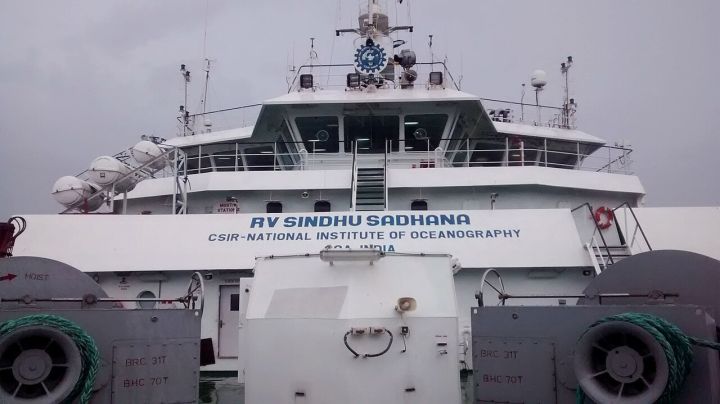
📷 Image: Wikimedia Commons / Ministry of Defence
Science
CSIR‑NIO Scientists Explore Venomous Marine Life for Novel Drugs
✍️ The Times of India
🗓 25 Aug 2026, 08:37 AM
👁 1
Researchers at the CSIR National Institute of Oceanography are analyzing toxins from venomous sea creatures to identify potential therapeutic compounds.
Researchers at the CSIR National Institute of Oceanography (NIO) in Goa are conducting a detailed study of toxins produced by venomous marine organisms, including sea snakes, cone snails and certain jellyfish species. The goal is to isolate bioactive molecules that could serve as the basis for new pharmaceuticals.
The team is employing advanced biochemical and genomic techniques to map the structure of these toxins and assess their pharmacological properties. Preliminary analyses have identified several compounds that show promise in targeting chronic pain, cancer cells and bacterial infections.
"Marine venoms are a largely untapped reservoir of biologically active molecules," said Dr. R. S. Patel, lead scientist at NIO. "By decoding their mechanisms, we hope to develop safer and more effective drugs for a range of diseases."
The research is part of a broader national effort to harness India’s marine biodiversity for medical innovation. Results from the study are expected to be published in a peer‑reviewed journal later this year.
The team is employing advanced biochemical and genomic techniques to map the structure of these toxins and assess their pharmacological properties. Preliminary analyses have identified several compounds that show promise in targeting chronic pain, cancer cells and bacterial infections.
"Marine venoms are a largely untapped reservoir of biologically active molecules," said Dr. R. S. Patel, lead scientist at NIO. "By decoding their mechanisms, we hope to develop safer and more effective drugs for a range of diseases."
The research is part of a broader national effort to harness India’s marine biodiversity for medical innovation. Results from the study are expected to be published in a peer‑reviewed journal later this year.