
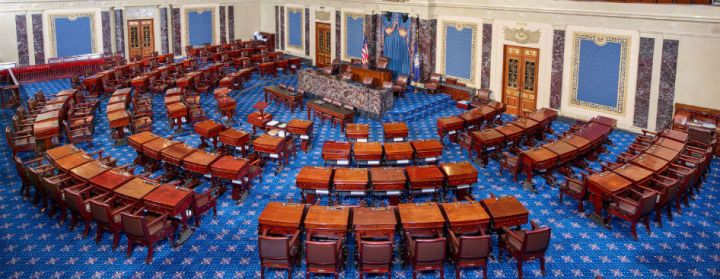
📷 Image: Wikimedia Commons / United States Senate
International
US Senate Approves Bill Authorizing 100% Tariffs on India, China for Russian Oil Purchases
✍️ NDTV Top
🗓 29 Jul 2026, 11:39 AM
👁 29
The U.S. Senate has passed a sanctions bill that would grant President Trump the power to impose up to 100% tariffs on goods from countries that purchase Russian oil and gas, with India and China highlighted as key targets.
The United States Senate has approved a sanctions bill that would give President Donald Trump the authority to impose tariffs of up to 100 percent on goods from nations that purchase Russian oil and gas. The legislation specifically names India and China as the primary targets for these potential duties.
Under the bill, the president would be empowered to levy the tariffs on a broad range of products, effectively making it costly for the targeted countries to import American goods. The move is aimed at pressuring major buyers of Russian energy to reduce their dependence on Moscow.
The Senate vote passed the measure with a majority, and it will now move to the House for consideration. If enacted, the tariffs could have significant economic implications for both India and China, as well as for U.S. exporters.
The bill reflects growing U.S. efforts to counter Russia’s influence in global energy markets, while also signaling a tougher stance on countries that continue to engage with Russian oil and gas supplies.
Under the bill, the president would be empowered to levy the tariffs on a broad range of products, effectively making it costly for the targeted countries to import American goods. The move is aimed at pressuring major buyers of Russian energy to reduce their dependence on Moscow.
The Senate vote passed the measure with a majority, and it will now move to the House for consideration. If enacted, the tariffs could have significant economic implications for both India and China, as well as for U.S. exporters.
The bill reflects growing U.S. efforts to counter Russia’s influence in global energy markets, while also signaling a tougher stance on countries that continue to engage with Russian oil and gas supplies.