
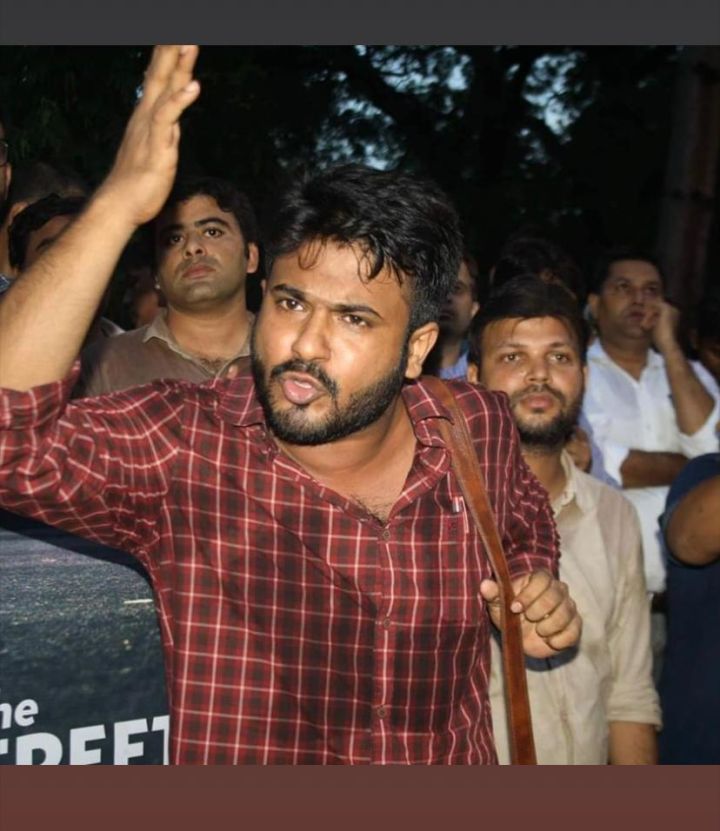
📷 Image: Wikimedia Commons / Abhisekh Raj
Crime
Supreme Court Lets Meeran Haider Attend Police Duty Weekly, Grants Wedding Exemption
✍️ indiagazette.com
🗓 26 Sep 2026, 04:38 AM
👁 10
In a ruling on the 2020 Delhi riots case, the Supreme Court permitted Meeran Haider to mark police attendance once a week and granted him an exemption for his wedding.
The Supreme Court today ruled that Meeran Haider, a key witness in the 2020 Delhi riots case, may attend police duty once a week and is exempted from attending his wedding. The decision was made after a petition filed by Haider’s legal team, arguing that the restrictions on his attendance were excessive.
Haider, who was arrested in 2020 on charges related to the riots, has been a central figure in the prosecution’s case. His cooperation with investigators has been deemed crucial, but the court noted that his participation in routine police duties could be limited to a single day each week.
The court’s order also includes a special exemption for Haider’s upcoming wedding, allowing him to skip police duty on that day. The ruling is seen as a compromise between the state’s demand for strict monitoring and the need to keep Haider available for ongoing investigations.
Justice S. K. Sharma, writing for the bench, emphasized that the decision balances the interests of law enforcement with the personal rights of a defendant who is actively cooperating with the investigation.
Haider, who was arrested in 2020 on charges related to the riots, has been a central figure in the prosecution’s case. His cooperation with investigators has been deemed crucial, but the court noted that his participation in routine police duties could be limited to a single day each week.
The court’s order also includes a special exemption for Haider’s upcoming wedding, allowing him to skip police duty on that day. The ruling is seen as a compromise between the state’s demand for strict monitoring and the need to keep Haider available for ongoing investigations.
Justice S. K. Sharma, writing for the bench, emphasized that the decision balances the interests of law enforcement with the personal rights of a defendant who is actively cooperating with the investigation.