
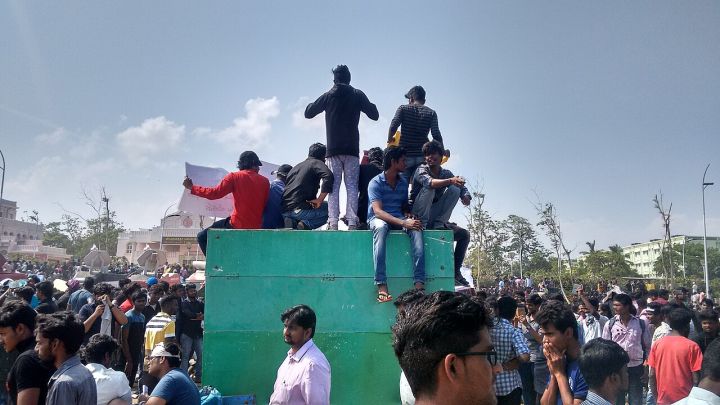
📷 Image: Wikimedia Commons / Vijayanarasimhan, K.
Politics
New Patriotic Songs Spark Debate Over Use in Student Protests
✍️ ThePrint
🗓 25 Jul 2026, 10:49 AM
👁 59
A wave of newly released patriotic songs has been adopted by student protest groups, sparking criticism that they are inappropriate for civil dissent. The songs, originally featured in the film Rang De Basanti, are now being reclaimed by the film’s creators.
A recent trend of newly released patriotic tracks has been adopted by student protest movements across India, prompting a debate over their suitability in civil dissent. Critics argue that the songs, which evoke nationalistic fervor, are misaligned with the protest’s demands for democratic reforms. The tracks were originally featured in the 2006 film Rang De Basanti, a movie that has long been associated with youth activism.
The controversy intensified after student groups began playing the songs at rallies, leading to accusations that the protests were turning into patriotic displays rather than focused political action. Some activists claim that the music’s emotional appeal distracts from the core issues of the movement.
In response, the producers of Rang De Basanti announced that the songs would be re‑released under the film’s brand, stating that the music was intended for cinematic purposes and not for political mobilization. The move has been seen by some as an attempt to reclaim the artistic integrity of the original work.
The debate highlights a broader question about the role of cultural artifacts in political movements and whether patriotic music can coexist with demands for systemic change.
While the protests continue, the discussion over the use of these songs remains a focal point for both supporters and critics of the student movement.
The controversy intensified after student groups began playing the songs at rallies, leading to accusations that the protests were turning into patriotic displays rather than focused political action. Some activists claim that the music’s emotional appeal distracts from the core issues of the movement.
In response, the producers of Rang De Basanti announced that the songs would be re‑released under the film’s brand, stating that the music was intended for cinematic purposes and not for political mobilization. The move has been seen by some as an attempt to reclaim the artistic integrity of the original work.
The debate highlights a broader question about the role of cultural artifacts in political movements and whether patriotic music can coexist with demands for systemic change.
While the protests continue, the discussion over the use of these songs remains a focal point for both supporters and critics of the student movement.