
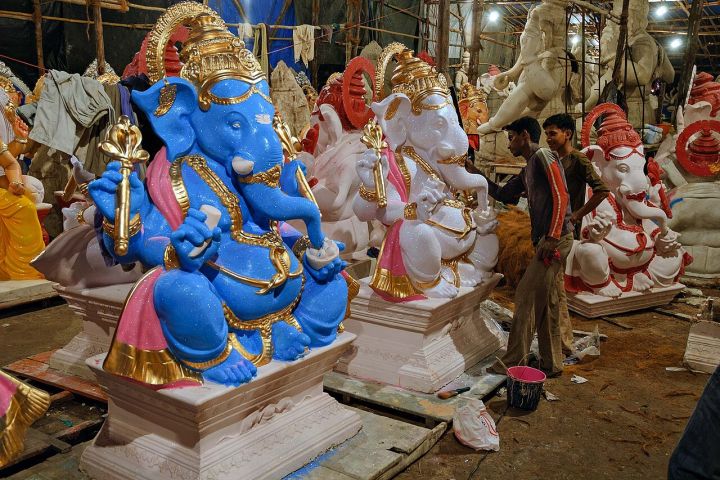
📷 Image: Wikimedia Commons / Everhard van Eimeren
Religion
Mumbai clears 2,755 tonnes of Ganesh idol waste in 12‑day drive
✍️ India Today
🗓 28 Sep 2026, 03:32 AM
👁 7
The Brihanmumbai Municipal Corporation reported that 2,755 tonnes of Ganesh idol material were collected over a 12‑day clean‑up after the Ganesh Chaturthi festivities.
Mumbai's civic authorities launched a city‑wide clean‑up operation following the conclusion of Ganesh Chaturthi, aiming to remove the massive amount of waste generated by the immersion of Ganesh idols. Over a period of twelve days, the Brihanmumbai Municipal Corporation (BMC) recorded the collection of 2,755 tonnes of idol material from various water bodies, streets and public spaces.
The collected waste was transported to designated processing facilities where it is being broken down, recycled where possible and disposed of in accordance with environmental guidelines. The BMC employed a combination of manual labor, mechanised shredders and water‑based treatment to handle the diverse composition of the idols, which often include plaster, clay and synthetic paints.
Officials highlighted that the swift removal of the debris helped prevent water pollution in the city's coastal zones and reduced the risk of health hazards for residents. The corporation also urged citizens to adopt eco‑friendly idol-making practices in future festivals to ease the burden on waste‑management systems.
The collected waste was transported to designated processing facilities where it is being broken down, recycled where possible and disposed of in accordance with environmental guidelines. The BMC employed a combination of manual labor, mechanised shredders and water‑based treatment to handle the diverse composition of the idols, which often include plaster, clay and synthetic paints.
Officials highlighted that the swift removal of the debris helped prevent water pollution in the city's coastal zones and reduced the risk of health hazards for residents. The corporation also urged citizens to adopt eco‑friendly idol-making practices in future festivals to ease the burden on waste‑management systems.