
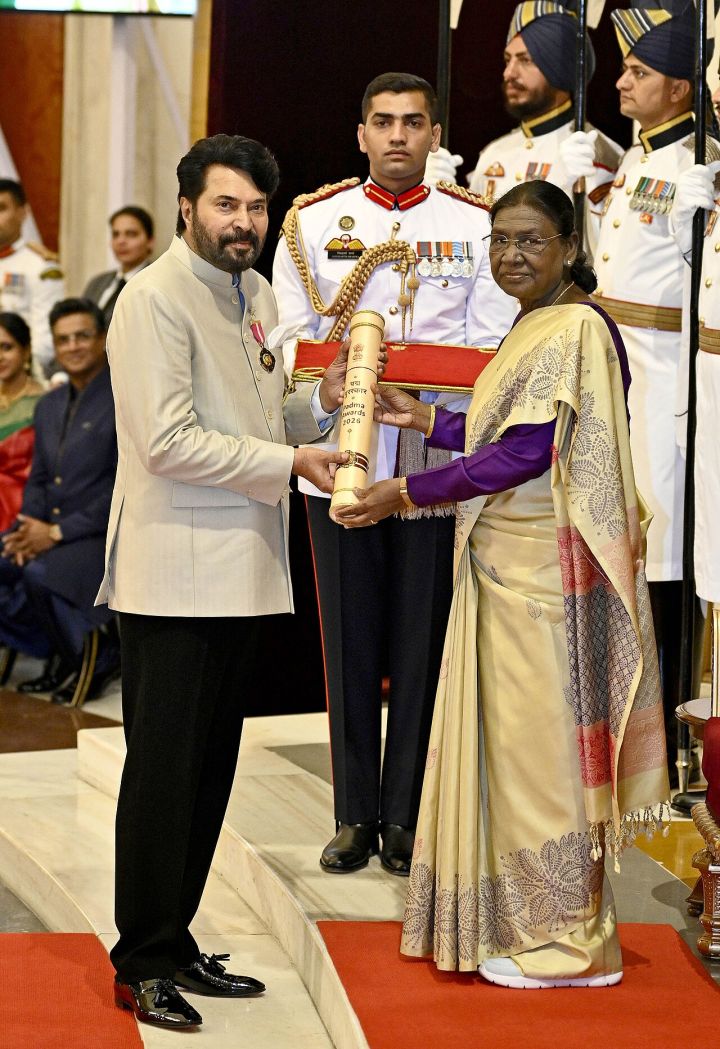
📷 Image: Wikimedia Commons / President's Secretariat
Entertainment
Mammootty’s tilak at National Film Awards draws criticism; Harisree Yousuf defends religion
✍️ The Times of India
🗓 27 Sep 2026, 12:17 PM
👁 10
Actor Mammootty’s decision to wear a tilak at the National Film Awards was met with public criticism, prompting fellow actor Harisree Yousuf to comment that religion should uplift humanity.
The National Film Awards ceremony saw veteran Malayalam star Mammootty appear on stage with a traditional tilak on his forehead, a visual choice that quickly became a talking point across media platforms. While the awards recognised cinematic excellence, Mammootty’s religious mark attracted attention beyond the usual film‑industry coverage.
Social media users and some cultural commentators criticised the gesture, arguing that a secular national event should not feature overt religious symbols. The criticism focused on the perceived mixing of personal faith expressions with a government‑organized awards function.
In response, fellow actor Harisree Yousuf took to public statements, emphasizing that religion’s purpose is to improve human behaviour. He said, “Religion is meant to make human beings better,” suggesting that personal faith should be respected rather than politicised.
The exchange highlights an ongoing debate in India about the role of religious expression in public and cultural events, especially when celebrated personalities become focal points for broader societal discussions.
Social media users and some cultural commentators criticised the gesture, arguing that a secular national event should not feature overt religious symbols. The criticism focused on the perceived mixing of personal faith expressions with a government‑organized awards function.
In response, fellow actor Harisree Yousuf took to public statements, emphasizing that religion’s purpose is to improve human behaviour. He said, “Religion is meant to make human beings better,” suggesting that personal faith should be respected rather than politicised.
The exchange highlights an ongoing debate in India about the role of religious expression in public and cultural events, especially when celebrated personalities become focal points for broader societal discussions.