
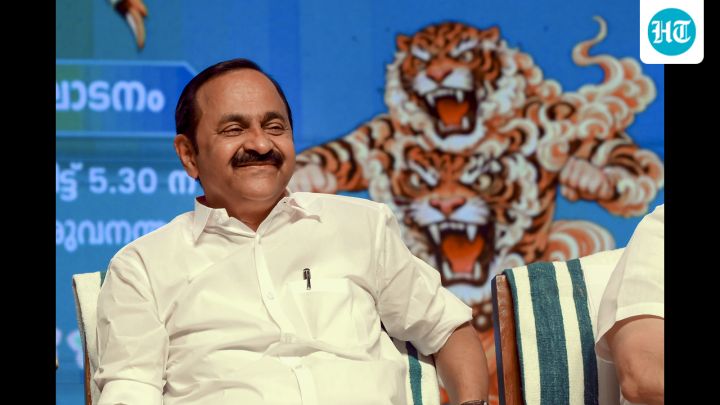
📷 Image: Hindustan Times (via NewsData)
Politics
Kerala's VD Satheesan government completes 100 days, prioritises women welfare but misses key manifesto pledges
✍️ Hindustan Times
🗓 28 Aug 2026, 08:40 AM
👁 2
The UDF‑led administration in Kerala celebrated its 100th day on August 26, launching several schemes aimed at empowering women while falling short on several promises outlined in its election manifesto.
The United Democratic Front (UDF) government in Kerala, headed by Deputy Chief Minister VD Satheesan, marked its 100th day in office on August 26, coinciding with the state’s Onam festivities. In the milestone week, the administration announced a series of welfare measures targeting women, including enhanced financial assistance for self‑help groups, expanded health insurance coverage, and new skill‑development programmes aimed at increasing female participation in the formal workforce.
While the government highlighted these initiatives as evidence of its commitment to gender equity, opposition parties and civil‑society groups pointed out that several flagship promises from the UDF’s election manifesto remain unfulfilled. Critics noted delays in the promised overhaul of public school infrastructure, the pending implementation of a universal pension scheme for senior citizens, and the lack of progress on agricultural loan waivers that were central to the party’s campaign.
The opposition’s criticism intensified during a session of the Kerala Legislative Assembly, where leaders accused the Satheesan ministry of selective governance and of prioritising symbolic projects over substantive reforms. The ruling party, however, defended its record, arguing that the early phase of governance naturally involves staggered rollout of large‑scale programmes and that the newly launched women‑focused schemes lay the groundwork for longer‑term development.
Analysts suggest that the 100‑day review will serve as a litmus test for the Satheesan government’s ability to balance political expectations with administrative capacity. With the next state elections slated for 2025, the administration’s performance on both welfare delivery and manifesto compliance will likely shape voter sentiment in the coming months.
Overall, the first hundred days have presented a mixed picture: notable progress on gender‑specific welfare, juxtaposed with noticeable gaps in broader policy promises, setting the tone for the challenges ahead for Kerala’s new leadership.
While the government highlighted these initiatives as evidence of its commitment to gender equity, opposition parties and civil‑society groups pointed out that several flagship promises from the UDF’s election manifesto remain unfulfilled. Critics noted delays in the promised overhaul of public school infrastructure, the pending implementation of a universal pension scheme for senior citizens, and the lack of progress on agricultural loan waivers that were central to the party’s campaign.
The opposition’s criticism intensified during a session of the Kerala Legislative Assembly, where leaders accused the Satheesan ministry of selective governance and of prioritising symbolic projects over substantive reforms. The ruling party, however, defended its record, arguing that the early phase of governance naturally involves staggered rollout of large‑scale programmes and that the newly launched women‑focused schemes lay the groundwork for longer‑term development.
Analysts suggest that the 100‑day review will serve as a litmus test for the Satheesan government’s ability to balance political expectations with administrative capacity. With the next state elections slated for 2025, the administration’s performance on both welfare delivery and manifesto compliance will likely shape voter sentiment in the coming months.
Overall, the first hundred days have presented a mixed picture: notable progress on gender‑specific welfare, juxtaposed with noticeable gaps in broader policy promises, setting the tone for the challenges ahead for Kerala’s new leadership.