
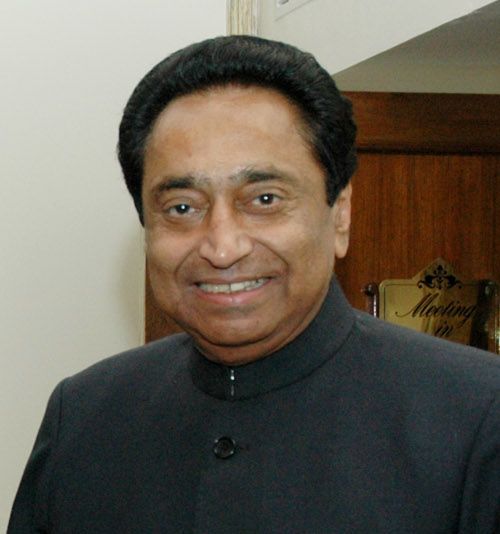
📷 Image: Wikimedia Commons / Ministry of Commerce and Industry (India)
Politics
Kamal Nath Criticises Madhya Pradesh BJP Over 27% OBC Reservation, Offers Congress Support
✍️ Amar Ujala · Bhopal
🗓 17 Oct 2026, 05:31 PM
👁 18
Former Madhya Pradesh chief minister Kamal Nath alleged that the BJP state government presented a weak legal case for the 27% OBC reservation and said Congress is ready to assist, prompting a rebuttal from BJP leader Hitesh Vajpayee.
Madhya Pradesh continues to grapple with the implementation of a 27% reservation for Other Backward Classes (OBC), a measure that has sparked intense political debate across the state. The reservation, intended to address historical inequities, requires robust legal justification before it can be fully enforced.
During a recent press interaction, former chief minister and Congress leader Kamal Nath accused the ruling BJP government of presenting a weak legal argument to support the OBC quota. He asserted that the government's stance lacked depth and could be challenged in courts, and he signalled that the Congress party is prepared to offer its assistance in navigating the legal complexities.
BJP spokesperson Hitesh Vajpayee responded to Nath's remarks, defending the government's position and dismissing the criticism as unfounded. Vajpayee emphasized that the state’s legal team is competent and that the reservation policy aligns with constitutional provisions. The exchange highlights the growing political tussle over reservation policies in the central Indian state.
During a recent press interaction, former chief minister and Congress leader Kamal Nath accused the ruling BJP government of presenting a weak legal argument to support the OBC quota. He asserted that the government's stance lacked depth and could be challenged in courts, and he signalled that the Congress party is prepared to offer its assistance in navigating the legal complexities.
BJP spokesperson Hitesh Vajpayee responded to Nath's remarks, defending the government's position and dismissing the criticism as unfounded. Vajpayee emphasized that the state’s legal team is competent and that the reservation policy aligns with constitutional provisions. The exchange highlights the growing political tussle over reservation policies in the central Indian state.