
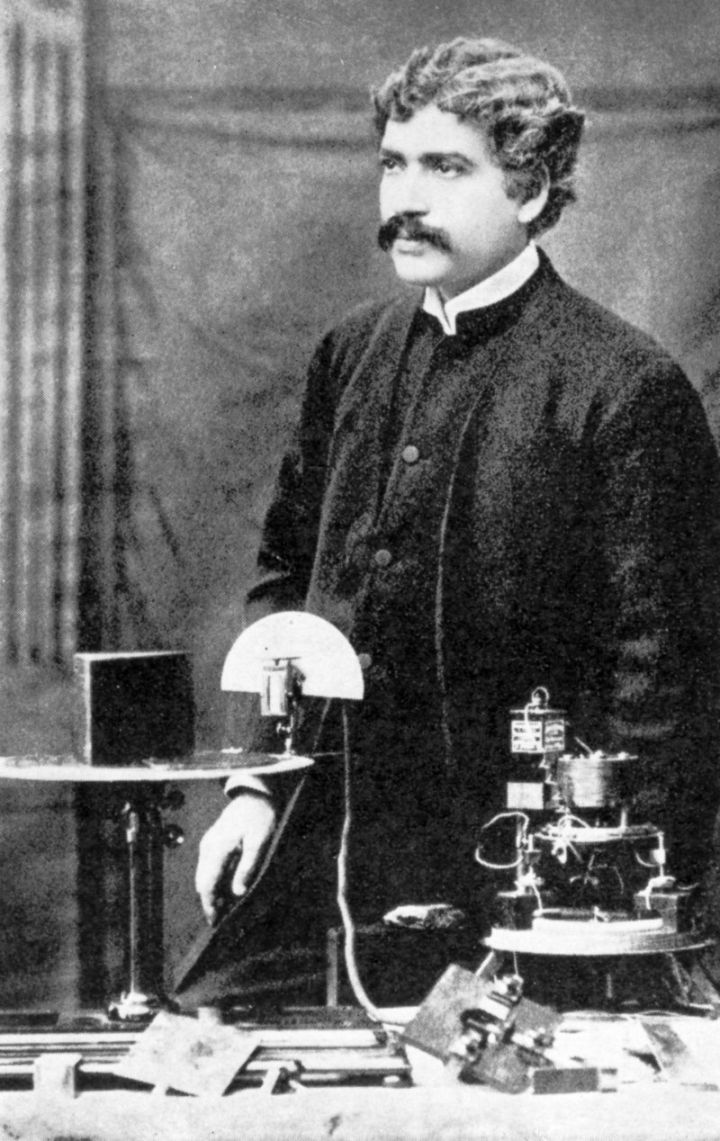
📷 Image: Wikimedia Commons / The Birth Centenary Committee, printed by P.C. Ray
Science
Jharkhand High Court Reopens 89-Year-Old Mystery of J.C. Bose’s Sealed Safe
✍️ INDIA New England News
🗓 19 Nov 2026, 05:31 AM
👁 27
The Jharkhand High Court has ordered a fresh examination of a safe belonging to pioneering scientist J.C. Bose that has remained sealed for almost nine decades.
The bench of the Jharkhand High Court has taken up a petition seeking a re‑investigation into a metal safe that once stored personal papers and experimental records of Sir Jagadish Chandra Bose. The safe, discovered in the scientist's former residence, was locked and left untouched for nearly 89 years before being brought to the court's attention.
According to court documents, the safe was originally sealed shortly after Bose's death in 1937 and has since become a subject of curiosity among historians and scientists. The petition argues that the contents could shed light on Bose's lesser‑known experiments and potentially fill gaps in the historical record of Indian science.
The court has directed the state archaeology department and a team of conservation experts to open the safe under supervised conditions, ensuring that any fragile material is preserved. A detailed report on the findings will be submitted to the court within a stipulated timeframe.
Legal scholars note that the case underscores the importance of safeguarding scientific heritage and may set a precedent for handling other historic artifacts in India. The outcome could also influence how museums and research institutions approach the preservation of early 20th‑century scientific memorabilia.
The decision has drawn interest from both academic circles and the general public, eager to learn whether any unpublished notes or prototypes by Bose will finally see the light of day.