
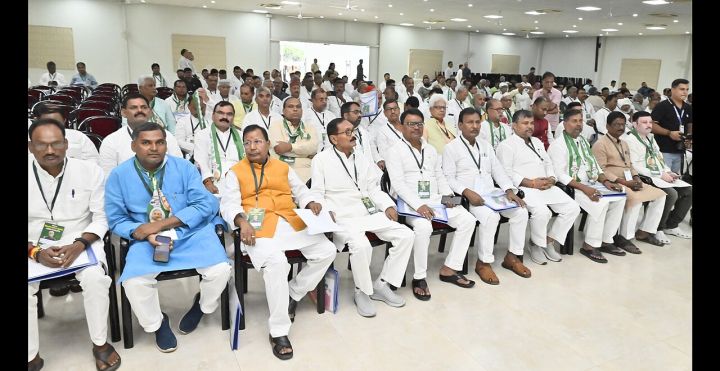
📷 Image: Wikimedia Commons / Information and public relations department Govern
Politics
JD(U) Opposes Renewal of Ganga Treaty with Bangladesh, Citing Bihar's Interests
✍️ The Economic Times
🗓 04 Sep 2026, 07:48 PM
👁 19
The Janata Dal (United) has voiced opposition to the renewal of the Ganga treaty with Bangladesh, arguing that the agreement does not adequately safeguard Bihar's interests.
The Janata Dal (United) party has publicly opposed the renewal of the Ganga treaty with Bangladesh, stating that the agreement fails to protect the interests of the state of Bihar.
The Ganga treaty, a water‑sharing agreement between India and Bangladesh, has been a subject of debate for years. JD(U) leaders argue that the current terms do not address key concerns of Bihar’s farmers and local communities.
The party’s stance reflects growing apprehensions among Bihar’s political circles about water management and border security. JD(U) has called for a revised framework that would give the state greater say in the allocation and usage of Ganga waters.
While the central government continues to negotiate the treaty’s renewal, JD(U) has urged the government to consider Bihar’s perspective more closely before finalizing any new agreement.
The opposition highlights the broader regional tensions over water sharing and underscores the need for inclusive dialogue that incorporates the voices of all affected states.
The Ganga treaty, a water‑sharing agreement between India and Bangladesh, has been a subject of debate for years. JD(U) leaders argue that the current terms do not address key concerns of Bihar’s farmers and local communities.
The party’s stance reflects growing apprehensions among Bihar’s political circles about water management and border security. JD(U) has called for a revised framework that would give the state greater say in the allocation and usage of Ganga waters.
While the central government continues to negotiate the treaty’s renewal, JD(U) has urged the government to consider Bihar’s perspective more closely before finalizing any new agreement.
The opposition highlights the broader regional tensions over water sharing and underscores the need for inclusive dialogue that incorporates the voices of all affected states.