
📷 Image: Wikimedia Commons / Skydoc28
Business
India’s non‑fossil power capacity crosses 300 GW, new grid challenges loom
✍️ newsable.asianetnews.com
🗓 24 Sep 2026, 06:33 PM
👁 15
India’s cumulative non‑fossil generation capacity has now exceeded 300 gigawatts, according to recent data, prompting officials to address emerging transmission and storage hurdles.
India’s total non‑fossil power capacity has officially crossed the 300‑gigawatt mark, a milestone reported by industry sources. The figure aggregates generation from solar, wind, hydro and nuclear plants and reflects the rapid expansion of clean energy projects over the past few years.
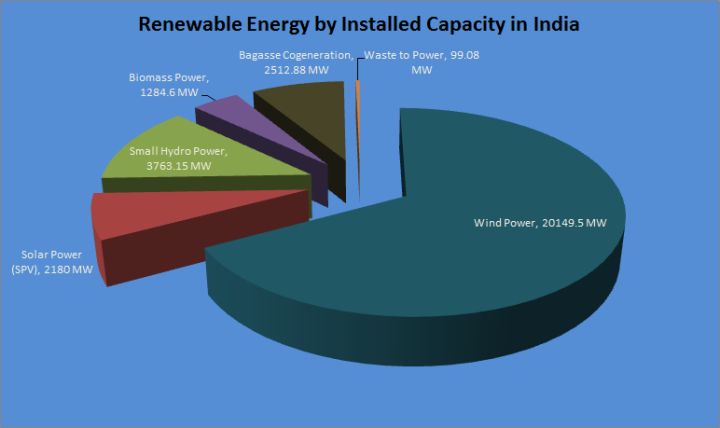
Solar and wind installations continue to drive the bulk of new additions, while hydro and nuclear contribute to a diversified renewable mix. The achievement aligns with the government’s long‑term target of sourcing a larger share of electricity from clean energy by 2030.
However, officials warn that the surge in capacity brings fresh challenges. Integrating intermittent renewable output into the national grid demands substantial upgrades in transmission infrastructure and large‑scale storage solutions to avoid curtailment.
Policy makers are now focusing on accelerating grid‑modernisation programmes, incentivising battery storage, and streamlining land‑acquisition for new transmission lines. Addressing these issues will be critical to fully harness the potential of the 300‑GW renewable base.
Solar and wind installations continue to drive the bulk of new additions, while hydro and nuclear contribute to a diversified renewable mix. The achievement aligns with the government’s long‑term target of sourcing a larger share of electricity from clean energy by 2030.
However, officials warn that the surge in capacity brings fresh challenges. Integrating intermittent renewable output into the national grid demands substantial upgrades in transmission infrastructure and large‑scale storage solutions to avoid curtailment.
Policy makers are now focusing on accelerating grid‑modernisation programmes, incentivising battery storage, and streamlining land‑acquisition for new transmission lines. Addressing these issues will be critical to fully harness the potential of the 300‑GW renewable base.