
📷 Image: Pragativadi (via NewsData)
Health
Indian scientists develop smartphone test to detect Alzheimer’s from a drop of blood
✍️ Pragativadi
🗓 26 Aug 2026, 02:03 PM
👁 2
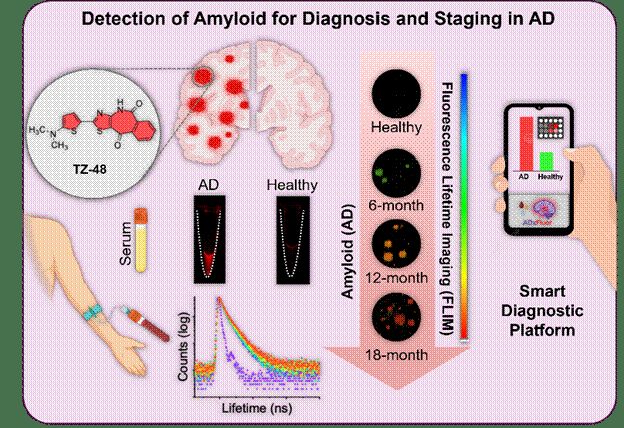
A research team at JNCASR has created a method that uses a smartphone and a single drop of blood to identify biomarkers linked to Alzheimer’s disease, potentially eliminating the need for costly scans.
Researchers at the Jawaharlal Nehru Centre for Advanced Scientific Research (JNCASR) announced a breakthrough that could simplify Alzheimer’s diagnosis. By applying a tiny blood sample to a specially designed chip, the device captures protein signatures associated with the disease and transmits the data to a smartphone app for analysis. The approach bypasses conventional imaging techniques such as PET or MRI, which are expensive and not widely accessible.
The team reported that the assay can detect the presence of amyloid‑beta and tau proteins—key biomarkers of Alzheimer’s—with sensitivity comparable to laboratory‑grade tests. Results are displayed on the phone within minutes, allowing clinicians to flag early‑stage cases for further evaluation.
While the prototype is still undergoing validation in clinical settings, the researchers believe it could enable large‑scale screening in remote or low‑resource areas. They plan to collaborate with hospitals and biotech firms to refine the technology and seek regulatory approval before commercial rollout.
If successful, the smartphone‑based test could transform public health strategies by providing a low‑cost, point‑of‑care tool for early detection, potentially improving outcomes for millions of Indians at risk of dementia.
The team reported that the assay can detect the presence of amyloid‑beta and tau proteins—key biomarkers of Alzheimer’s—with sensitivity comparable to laboratory‑grade tests. Results are displayed on the phone within minutes, allowing clinicians to flag early‑stage cases for further evaluation.
While the prototype is still undergoing validation in clinical settings, the researchers believe it could enable large‑scale screening in remote or low‑resource areas. They plan to collaborate with hospitals and biotech firms to refine the technology and seek regulatory approval before commercial rollout.
If successful, the smartphone‑based test could transform public health strategies by providing a low‑cost, point‑of‑care tool for early detection, potentially improving outcomes for millions of Indians at risk of dementia.