
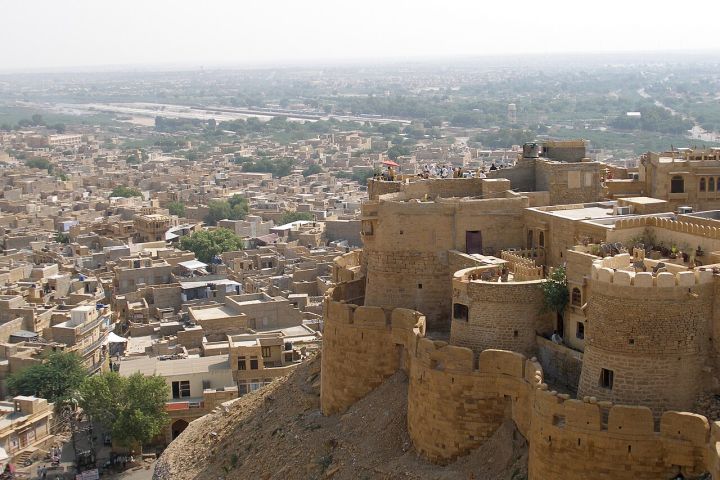
📷 Image: Wikimedia Commons / Vyacheslav Argenberg
Weather
Heat spikes to 41.5°C in Jaisalmer as rains cease, dry spell expected for next 5 days
✍️ Amar Ujala · Rajasthan
🗓 23 Sep 2026, 06:36 AM
👁 10
After the monsoon showers ended, temperatures in Jaisalmer rose to 41.5°C, and forecasts predict dry conditions across Rajasthan for the coming five days.
Rainfall across Rajasthan tapered off this week, allowing daytime temperatures to climb sharply. In the western desert city of Jaisalmer, the mercury touched 41.5°C, marking one of the highest readings since the monsoon retreat.
The cessation of showers has left much of the state under clear skies, with humidity levels dropping and heat intensifying. Meteorologists note that the current pattern is typical for the post‑monsoon transition, but the rapid rise in temperature has raised concerns for vulnerable populations.
Weather forecasts for the next five days show a continuation of dry conditions across Rajasthan, with maximum temperatures expected to hover in the high‑30s to low‑40s Celsius. No significant rain is anticipated, and heat‑related advisories are likely to be issued for outdoor workers and schoolchildren.
Authorities are urging residents to stay hydrated, avoid prolonged exposure to the sun during peak hours, and monitor updates from the state’s disaster management agency.
The cessation of showers has left much of the state under clear skies, with humidity levels dropping and heat intensifying. Meteorologists note that the current pattern is typical for the post‑monsoon transition, but the rapid rise in temperature has raised concerns for vulnerable populations.
Weather forecasts for the next five days show a continuation of dry conditions across Rajasthan, with maximum temperatures expected to hover in the high‑30s to low‑40s Celsius. No significant rain is anticipated, and heat‑related advisories are likely to be issued for outdoor workers and schoolchildren.
Authorities are urging residents to stay hydrated, avoid prolonged exposure to the sun during peak hours, and monitor updates from the state’s disaster management agency.