
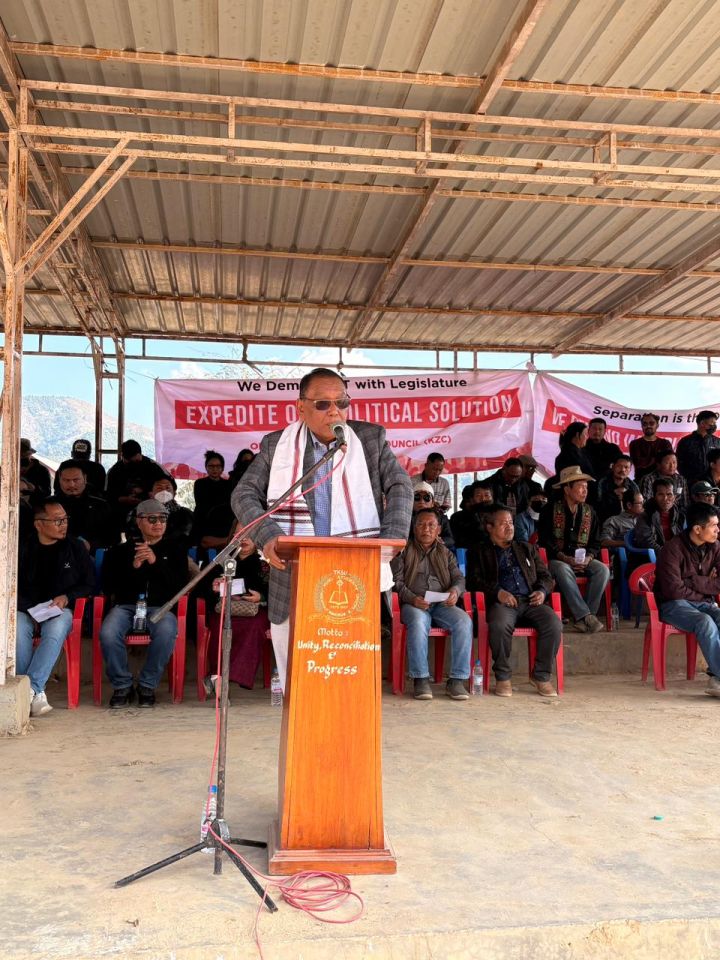
📷 Image: Wikimedia Commons / Ginza Vualzong
Politics
Emerging fault lines in Manipur’s Kuki‑Zo and Naga conflict
✍️ The Hindu
🗓 18 Sep 2026, 04:01 AM
👁 5
Analysts highlight fresh divisions within the long‑standing Kuki‑Zo and Naga clash in Manipur, altering the state’s ethnic and political landscape.
The ethnic confrontation between the Kuki‑Zo and Naga communities in Manipur, which has simmered for decades, is now showing new fault lines, according to political observers. Recent meetings of community leaders and shifts in local alliances suggest that the dispute is moving beyond traditional territorial grievances to encompass broader political representation and resource allocation.
Experts say that the emergence of these new divisions could complicate peace‑building efforts that have so far focused on cease‑fire agreements and limited dialogue. The changing dynamics are prompting the state administration to reassess its engagement strategy with both groups, aiming to prevent further escalation.
While the core issues of land rights and cultural autonomy remain, the added layers of intra‑ethnic competition are reshaping how the conflict is perceived at the national level. Observers caution that without inclusive negotiations, the risk of sporadic clashes may increase, affecting civilian life and development projects across the region.
The Hindu’s recent analysis underscores the need for a nuanced approach that acknowledges the evolving nature of the Kuki‑Zo–Naga relationship, urging policymakers to address both historic grievances and the newly emerging points of contention.
Experts say that the emergence of these new divisions could complicate peace‑building efforts that have so far focused on cease‑fire agreements and limited dialogue. The changing dynamics are prompting the state administration to reassess its engagement strategy with both groups, aiming to prevent further escalation.
While the core issues of land rights and cultural autonomy remain, the added layers of intra‑ethnic competition are reshaping how the conflict is perceived at the national level. Observers caution that without inclusive negotiations, the risk of sporadic clashes may increase, affecting civilian life and development projects across the region.
The Hindu’s recent analysis underscores the need for a nuanced approach that acknowledges the evolving nature of the Kuki‑Zo–Naga relationship, urging policymakers to address both historic grievances and the newly emerging points of contention.