
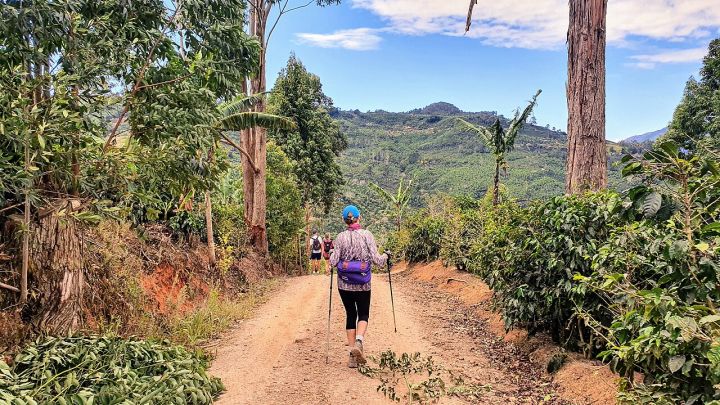
📷 Image: Wikimedia Commons / Pigment-Ink
Agriculture
Coffee promoted as sustainable alternative to poppy farming in Manipur
✍️ thesangaiexpress.com
🗓 01 Oct 2026, 05:17 AM
👁 16
Authorities in Manipur are encouraging coffee cultivation to replace poppy crops, citing environmental and economic benefits.
Manipur's agricultural officials have launched a programme to shift farmers from illicit poppy cultivation to coffee production. The initiative aims to provide a legal, market‑linked cash crop that can thrive in the state's hilly terrain and receive steady demand from domestic and export markets.
The switch is presented as a sustainable solution, reducing the environmental degradation associated with poppy fields while offering higher and more stable incomes for smallholders. Training on coffee planting, pruning and processing is being offered through local extension services, and subsidies for seedlings and equipment have been announced.
Early pilot projects in districts such as Churachandpur and Ukhrul have shown promising yields, prompting the state government to scale the model across other poppy‑prone areas. Officials say the move also aligns with national efforts to curb illicit drug production while boosting the agricultural sector.
Stakeholders, including coffee traders and NGOs, have welcomed the policy, noting that coffee's longer harvest cycle and value‑addition potential can create ancillary jobs in processing and marketing. The programme is expected to be monitored over the next two years to assess its impact on both livelihoods and drug‑related activities.
The switch is presented as a sustainable solution, reducing the environmental degradation associated with poppy fields while offering higher and more stable incomes for smallholders. Training on coffee planting, pruning and processing is being offered through local extension services, and subsidies for seedlings and equipment have been announced.
Early pilot projects in districts such as Churachandpur and Ukhrul have shown promising yields, prompting the state government to scale the model across other poppy‑prone areas. Officials say the move also aligns with national efforts to curb illicit drug production while boosting the agricultural sector.
Stakeholders, including coffee traders and NGOs, have welcomed the policy, noting that coffee's longer harvest cycle and value‑addition potential can create ancillary jobs in processing and marketing. The programme is expected to be monitored over the next two years to assess its impact on both livelihoods and drug‑related activities.