
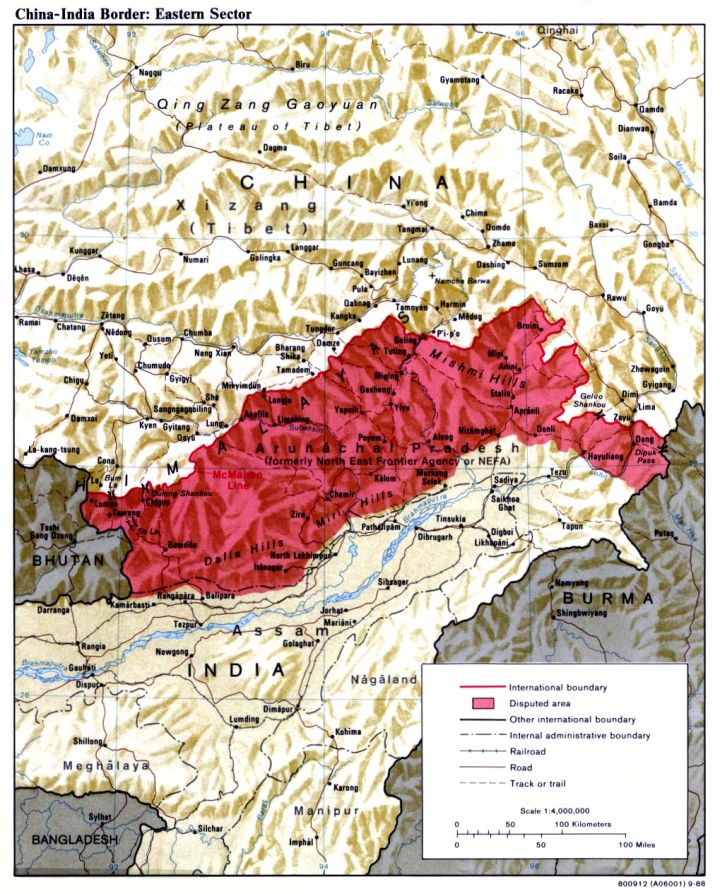
📷 Image: Wikimedia Commons / Central Intelligence Agency
International
China Declares Arunachal Pradesh Part of 'South Tibet', Calls It 'Zangnan'
✍️ Madhyamam
🗓 27 Nov 2026, 03:18 AM
👁 21
China has asserted that Arunachal Pradesh, a state in northeastern India, belongs to South Tibet and has dubbed the territory 'Zangnan', intensifying the longstanding border dispute.
China has formally claimed Arunachal Pradesh as part of South Tibet, referring to the territory as "Zangnan" in a recent statement. The claim follows a long history of territorial disputes between the two countries over the northeastern Indian state.
The designation "Zangnan"—meaning "Southern Tibet"—was used in a press release issued by the Chinese Ministry of Foreign Affairs. The statement reiterated Beijing’s position that the area historically belongs to Tibet and is therefore under Chinese sovereignty.
Indian officials have dismissed the claim, reaffirming that Arunachal Pradesh is an integral part of India. The Ministry of External Affairs released a brief response, urging China to respect India’s territorial integrity and to resolve differences through dialogue.
The latest assertion comes at a time when both nations are engaged in border talks. Analysts warn that such rhetoric could complicate ongoing negotiations and heighten tensions along the Line of Actual Control.