
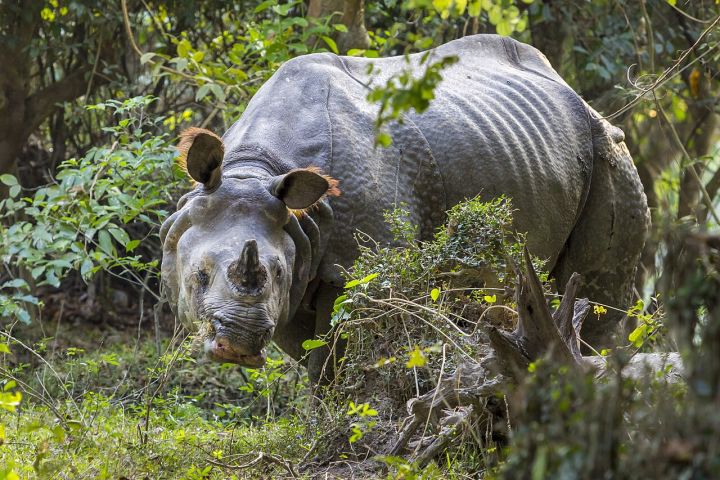
📷 Image: Wikimedia Commons / Travelure
Science
Assam's One-Horned Rhino Count Hits 3,260, Covering 80% of Global Population, CM Says
✍️ Northeast Today
🗓 16 Sep 2026, 04:01 AM
👁 5
Chief Minister Himanta Biswa Sarma announced that Assam now hosts 3,260 one‑horned rhinoceroses, accounting for about 80% of the species worldwide.
Chief Minister Himanta Biswa Sarma said on Monday that the latest wildlife census records 3,260 Indian one‑horned rhinoceroses in Assam. The figure represents roughly four‑fifths of the global population of the endangered species, underscoring the state’s pivotal role in conservation.
The count was compiled by the state forest department in collaboration with the National Board for Wildlife, using aerial surveys and ground verification across protected areas such as Kaziranga and Manas National Parks. Officials highlighted that the steady rise in numbers reflects successful anti‑poaching measures and habitat restoration efforts over the past decade.
Conservationists welcomed the data, noting that Assam’s wetlands and grasslands provide the ideal ecosystem for the rhinos. However, they cautioned that continued vigilance is essential to safeguard the herd against illegal hunting and habitat encroachment.
The state government plans to expand community‑based monitoring and strengthen trans‑boundary cooperation with neighboring regions to ensure the long‑term survival of the species.
The count was compiled by the state forest department in collaboration with the National Board for Wildlife, using aerial surveys and ground verification across protected areas such as Kaziranga and Manas National Parks. Officials highlighted that the steady rise in numbers reflects successful anti‑poaching measures and habitat restoration efforts over the past decade.
Conservationists welcomed the data, noting that Assam’s wetlands and grasslands provide the ideal ecosystem for the rhinos. However, they cautioned that continued vigilance is essential to safeguard the herd against illegal hunting and habitat encroachment.
The state government plans to expand community‑based monitoring and strengthen trans‑boundary cooperation with neighboring regions to ensure the long‑term survival of the species.