
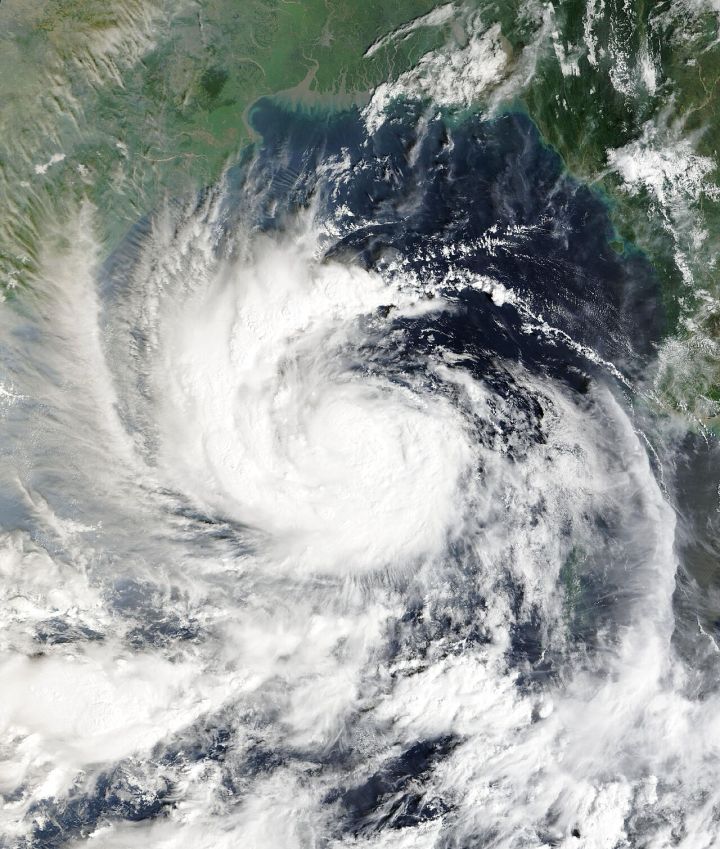
📷 Image: Wikimedia Commons / MODIS imagery from NOAA's Terra satellite
Weather
Andhra Pradesh and Odisha Brace for Cyclone Arnab with Evacuation Plans
✍️ Business Standard
🗓 26 Oct 2026, 01:33 PM
👁 20
State authorities in Andhra Pradesh and Odisha are mobilising evacuation measures as Cyclone Arnab approaches the eastern coast of India.
The Indian Meteorological Department has issued a warning that Cyclone Arnab is expected to make landfall along the eastern coastline within the next 24 hours. In response, disaster management teams in Andhra Pradesh and Odisha have begun coordinating large‑scale evacuations in vulnerable coastal districts.
Officials in both states are directing residents of low‑lying villages and towns to move to designated relief shelters, many of which have been set up in schools, community halls and government buildings. The evacuation drive is being supported by police, the National Disaster Response Force and local volunteers who are distributing food, water and basic medical kits.
Transportation arrangements, including buses and boats, are being deployed to ensure that people can reach safety quickly. Authorities have also ordered the pre‑positioning of emergency supplies and have activated early warning systems to keep the public informed of the cyclone's progress.
The coordinated effort reflects lessons learned from previous cyclones that have caused extensive damage in the Bay of Bengal region. While the exact impact of Arnab remains uncertain, officials stress that timely evacuation is the most effective way to safeguard lives.
The situation will be monitored continuously, and further updates will be provided as the cyclone moves closer to the coast.