
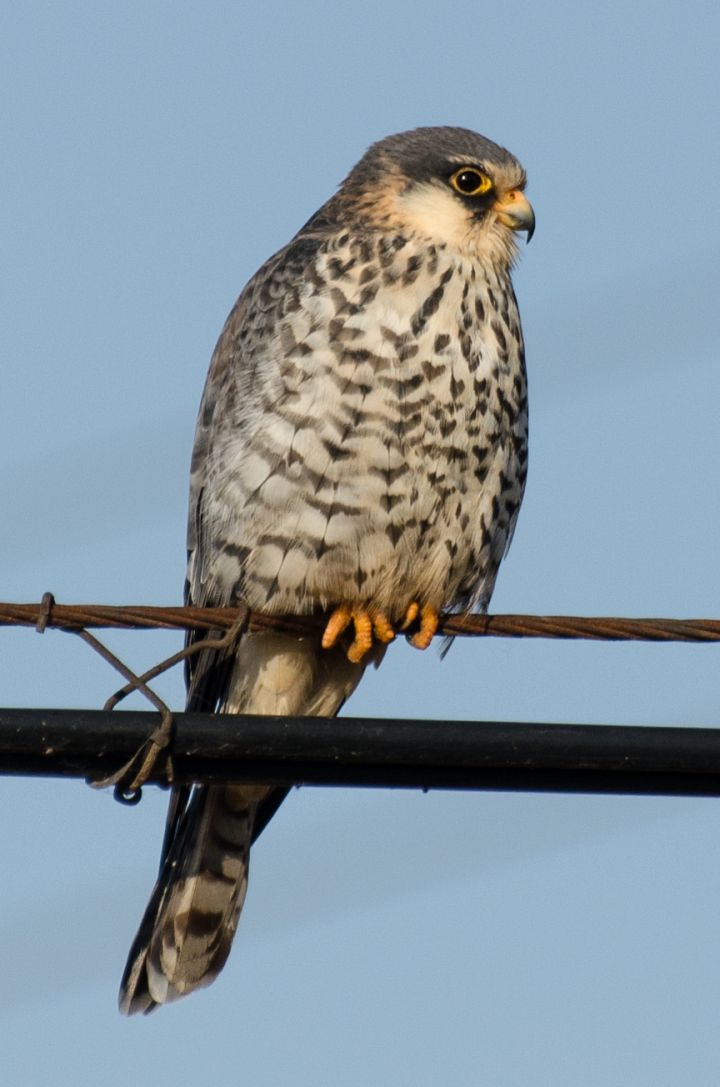
📷 Image: Wikimedia Commons / DrewHeath
Science
Amur Falcons Complete 3,000‑km Non‑Stop Flight Over Ocean to Africa
✍️ India Today
🗓 24 Nov 2026, 08:01 AM
👁 9
Amur falcons have completed a nonstop 3,000‑kilometre flight over the ocean, reaching Africa for the first time in their migratory route.
Amur falcons have successfully flown a nonstop 3,000‑kilometre journey across the ocean, landing in Africa for the first time in their migratory history. The birds, known for their long‑distance flights, covered the distance without any stopovers, a feat that highlights their endurance and navigational precision.
Scientists say the flight path likely followed a great circle route, cutting through the Atlantic and Indian Oceans. The record‑setting journey was observed by a team of ornithologists using satellite tracking, which confirmed the continuous flight and the final destination in the African savannah.
Historically, Amur falcons have migrated from East Asia to South Asia, but this new route extends their range significantly. The shift may be linked to changing climate patterns and the availability of prey along the new corridor.
Conservationists view the event as a warning that migratory birds are adapting rapidly to environmental changes. Monitoring such shifts is crucial for protecting these species and the ecosystems they traverse.