
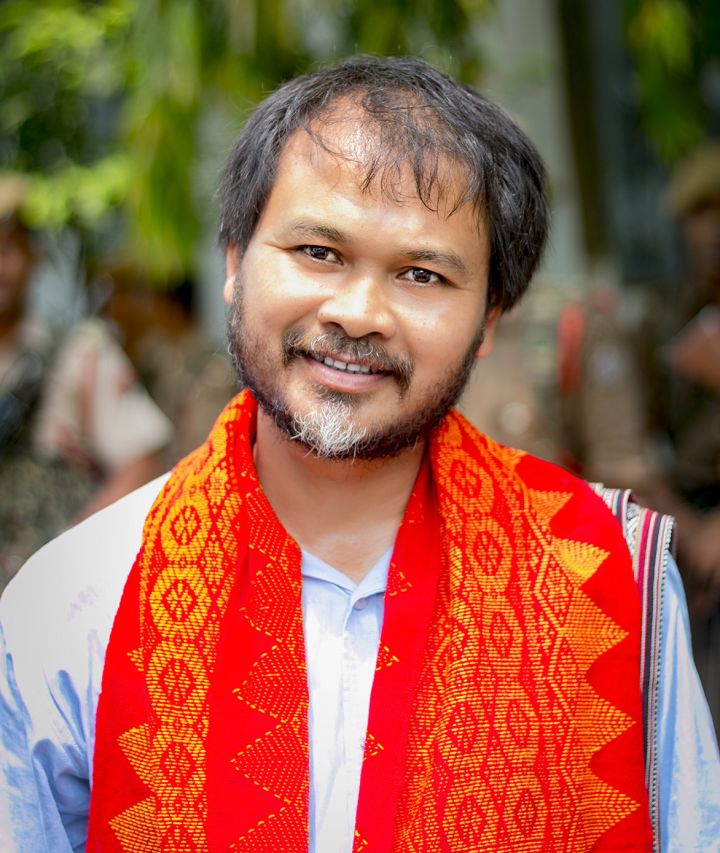
📷 Image: Wikimedia Commons / Vikramjit Kakati
Politics
Akhil Gogoi Calls Assam Budget a 'Copy-Paste' Exercise
✍️ India Today NE
🗓 10 Jul 2026, 07:02 PM
👁 35
Akhil Gogoi, a prominent Assam political figure, criticized the state's budget as a copy‑paste exercise, saying it lacks originality and fails to address local needs.
During the recent budget session in the Assam Legislative Assembly, Akhil Gogoi, a senior leader of the opposition, publicly denounced the state budget as a "copy‑paste" exercise. He argued that the proposals largely replicate measures from previous years without significant innovation or adaptation to the current economic climate.
Gogoi pointed out that the budget’s emphasis on familiar schemes and familiar allocations does not reflect the evolving needs of Assam’s diverse communities. He urged the government to rethink its approach and introduce fresh policies that directly target regional development.
The ruling party’s spokesperson dismissed the criticism, claiming that the budget builds on proven frameworks and that continuity is essential for stability. However, opposition leaders echoed Gogoi’s concerns, calling for greater transparency and stakeholder consultation.
The debate underscores a broader discussion about policy formulation in Assam, with stakeholders questioning whether repeated reliance on past models can effectively address the state’s pressing challenges.
Gogoi pointed out that the budget’s emphasis on familiar schemes and familiar allocations does not reflect the evolving needs of Assam’s diverse communities. He urged the government to rethink its approach and introduce fresh policies that directly target regional development.
The ruling party’s spokesperson dismissed the criticism, claiming that the budget builds on proven frameworks and that continuity is essential for stability. However, opposition leaders echoed Gogoi’s concerns, calling for greater transparency and stakeholder consultation.
The debate underscores a broader discussion about policy formulation in Assam, with stakeholders questioning whether repeated reliance on past models can effectively address the state’s pressing challenges.