
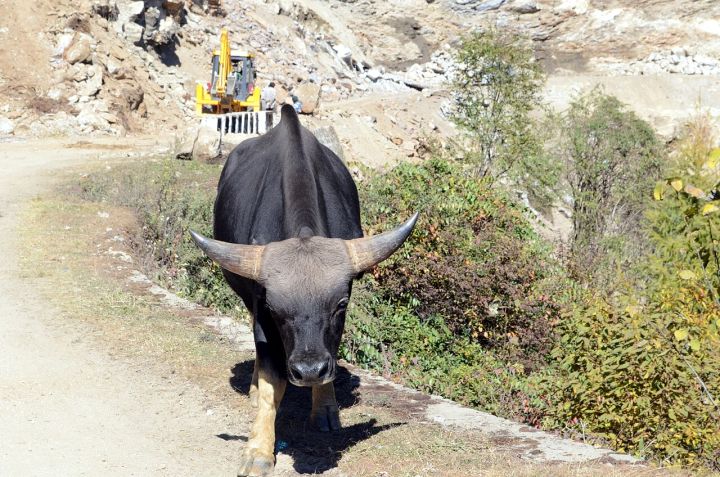
📷 Image: Wikimedia Commons / Christopher J. Fynn
Agriculture
AI system monitors Nagaland’s mithun, promising advances in livestock care
✍️ Hub News
🗓 09 Sep 2026, 05:03 AM
👁 4
Researchers have trained an artificial‑intelligence model to watch the mithun, a native bovine of Nagaland, opening prospects for better herd health management.
Scientists have developed an artificial‑intelligence system capable of continuously observing mithun, the semi‑domesticated cattle found in the hills of Nagaland. The AI analyzes visual data to recognise normal behaviour patterns and flag deviations that may indicate stress or illness.
The technology is being tested in local farms, where it can alert herders to early signs of disease, nutritional deficiencies or injuries, potentially reducing mortality and improving productivity. By automating routine monitoring, the system aims to ease the labour burden on small‑scale livestock keepers.
Experts say that such AI‑driven tools could transform traditional animal husbandry practices across the Northeast, offering data‑backed insights that were previously unavailable in remote areas.
The initiative also underscores a broader trend of applying advanced digital solutions to agriculture, aligning with national goals of modernising the livestock sector.
Further field trials are planned to refine the model’s accuracy and adapt it to other indigenous breeds.
The technology is being tested in local farms, where it can alert herders to early signs of disease, nutritional deficiencies or injuries, potentially reducing mortality and improving productivity. By automating routine monitoring, the system aims to ease the labour burden on small‑scale livestock keepers.
Experts say that such AI‑driven tools could transform traditional animal husbandry practices across the Northeast, offering data‑backed insights that were previously unavailable in remote areas.
The initiative also underscores a broader trend of applying advanced digital solutions to agriculture, aligning with national goals of modernising the livestock sector.
Further field trials are planned to refine the model’s accuracy and adapt it to other indigenous breeds.