
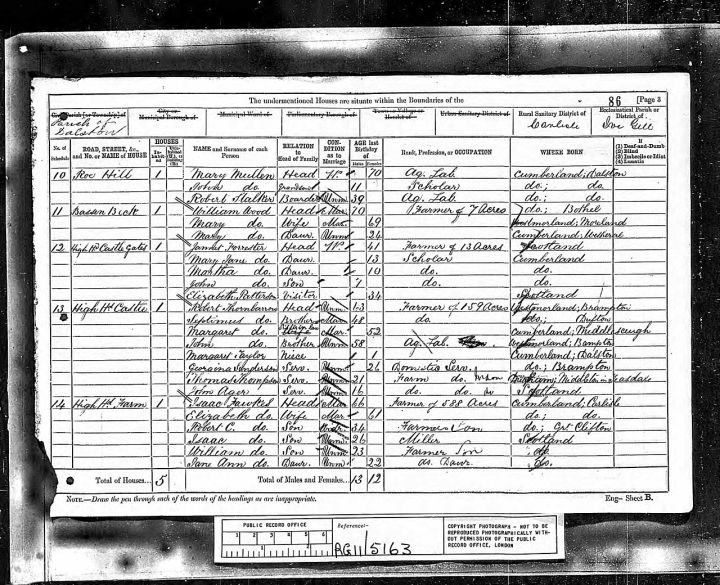
📷 Image: Wikimedia Commons / UK National Archives. Newcastle City Library Archi
National
1881 Census Redrew India’s Social Map, Cementing Caste and Community Identities
✍️ ThePrint
🗓 28 Sep 2026, 06:16 AM
👁 10
The 1881 Census of India introduced a systematic classification of caste, religion and occupation that continues to shape India’s social and political landscape.
The British‑run 1881 Census was the first to record India’s population with detailed social categories, moving beyond mere headcounts. Enumerators were instructed to note caste, religion, language and occupation for each individual, creating a granular data set that the colonial administration used to draw administrative boundaries and allocate resources.
By codifying caste and community labels, the census gave a fixed, official status to groups that had previously been identified in fluid, local terms. This official recognition reinforced social hierarchies and provided a template for later censuses, which replicated and expanded the same categories.
Scholars argue that the 1881 exercise laid the groundwork for modern identity politics in India. The data informed policies on representation, land revenue and education, and it continues to be cited in contemporary debates over affirmative action and communal demographics.
The legacy of the 1881 Census is evident in today’s electoral rolls, reservation quotas and academic research, underscoring how a nineteenth‑century bureaucratic exercise still defines India’s social map.
By codifying caste and community labels, the census gave a fixed, official status to groups that had previously been identified in fluid, local terms. This official recognition reinforced social hierarchies and provided a template for later censuses, which replicated and expanded the same categories.
Scholars argue that the 1881 exercise laid the groundwork for modern identity politics in India. The data informed policies on representation, land revenue and education, and it continues to be cited in contemporary debates over affirmative action and communal demographics.
The legacy of the 1881 Census is evident in today’s electoral rolls, reservation quotas and academic research, underscoring how a nineteenth‑century bureaucratic exercise still defines India’s social map.