
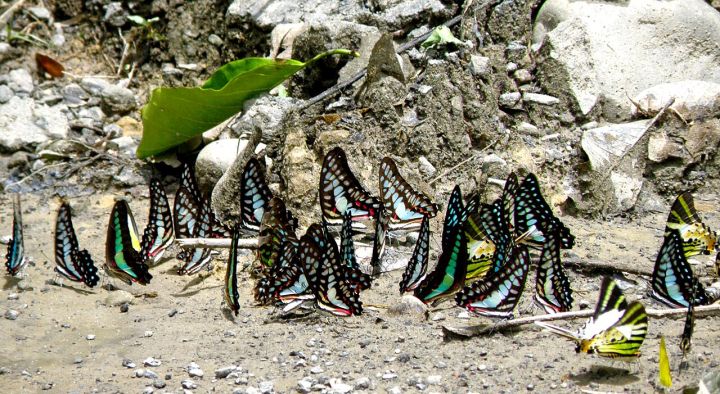
📷 Image: Wikimedia Commons / Donvikro / Vikramjit Kakati, Assam, India
Science
1821‑recorded shrub rediscovered in Assam’s forests, scientists say
✍️ Hindustan Times
🗓 26 Oct 2026, 09:36 PM
👁 20
Botanists have located a shrub first documented in 1821 in Assam, confirming its survival after two centuries.
Botanists conducting a biodiversity survey in the northeastern state of Assam have confirmed the presence of a shrub that was first recorded by British naturalists in 1821. The plant was found in a remote forested area of the state's foothills, where researchers from the Assam Forest Department and a local university documented its morphological features and photographed the specimen.
The shrub’s original description dates back to the early colonial period, when few plant species from the region were formally catalogued. Its rediscovery after more than 200 years provides rare evidence that some historically noted flora have persisted despite extensive land‑use changes and habitat fragmentation.
During the same field expedition, scientists also identified two previously unknown fish species in nearby streams, underscoring the rich, yet still under‑explored, biodiversity of Assam’s ecosystems. The findings have been forwarded to the National Biodiversity Authority for formal description and conservation assessment.
Authorities say the discovery will prompt targeted conservation measures, including habitat protection and further taxonomic studies, to safeguard both the rediscovered shrub and the newly identified aquatic fauna.