
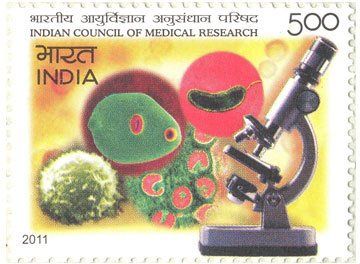
📷 Image: Wikimedia Commons / Post of India
Health
ICMR launches high‑altitude research centre in Keylong to probe Himalayan health risks
✍️ The Times of India
🗓 13 Oct 2026, 02:32 AM
👁 11
The Indian Council of Medical Research has inaugurated a new high‑altitude research facility in Keylong, Himachal Pradesh, aimed at studying the health impacts of living and working in the Himalayan region.
The Indian Council of Medical Research (ICMR) officially opened a high‑altitude research centre in Keylong, Lahaul‑Spiti district of Himachal Pradesh. The facility is positioned at an elevation of over 3,000 metres, providing a natural laboratory for studying health challenges unique to the Himalayan environment.
Researchers at the centre will focus on altitude‑related illnesses such as acute mountain sickness, high‑altitude pulmonary and cerebral edema, as well as chronic conditions like hypoxia‑induced cardiovascular and respiratory disorders. The lab will also examine how traditional lifestyles and occupational exposures in the mountains influence disease patterns.
The centre is equipped with modern physiological monitoring equipment, a biochemistry lab, and field‑testing units for remote data collection. ICMR has mobilised a multidisciplinary team of doctors, epidemiologists, and environmental scientists to conduct longitudinal studies and generate evidence for health guidelines tailored to high‑altitude populations.
By generating region‑specific data, the institute aims to inform public‑health policies, improve medical preparedness for trekkers and residents, and contribute to broader scientific understanding of human adaptation to extreme environments.
Researchers at the centre will focus on altitude‑related illnesses such as acute mountain sickness, high‑altitude pulmonary and cerebral edema, as well as chronic conditions like hypoxia‑induced cardiovascular and respiratory disorders. The lab will also examine how traditional lifestyles and occupational exposures in the mountains influence disease patterns.
The centre is equipped with modern physiological monitoring equipment, a biochemistry lab, and field‑testing units for remote data collection. ICMR has mobilised a multidisciplinary team of doctors, epidemiologists, and environmental scientists to conduct longitudinal studies and generate evidence for health guidelines tailored to high‑altitude populations.
By generating region‑specific data, the institute aims to inform public‑health policies, improve medical preparedness for trekkers and residents, and contribute to broader scientific understanding of human adaptation to extreme environments.