
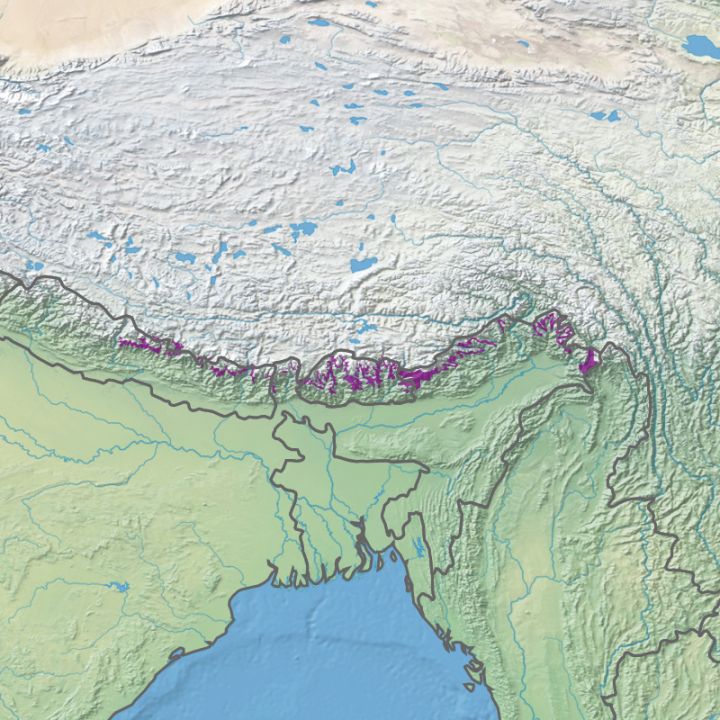
📷 Image: Wikimedia Commons / Every-leaf-that-trembles
Science
Eastern Himalayan Dialogue Urges Joint Spring Governance to Boost Mountain Water Security
✍️ Sikkimexpress
🗓 11 Oct 2026, 12:01 PM
👁 10
The recent Eastern Himalayan Dialogue emphasized the need for coordinated spring governance to safeguard mountain water resources across the region.
Representatives from the Eastern Himalayan region gathered in a dialogue that focused on the growing challenges of water security in mountainous areas. Participants highlighted that the spring melt season is a critical period for downstream water availability and called for a coordinated governance framework to manage this resource more effectively.
The call for "spring governance" aims to align policies of states, local bodies, and water users to ensure that meltwater is captured, stored, and distributed in a manner that reduces waste and mitigates flood risks. Experts noted that fragmented management has often led to inefficiencies, especially as climate variability intensifies the timing and volume of spring runoff.
Stakeholders agreed to develop a joint action plan that will include data sharing, joint monitoring of snow and glacier melt, and the establishment of trans‑boundary water committees. The dialogue concluded with a commitment to reconvene later in the year to assess progress and refine strategies.
By promoting a unified approach, the participants hope to strengthen the resilience of communities that depend on mountain water for agriculture, drinking supply, and hydro‑electric power, thereby enhancing overall water security in the Eastern Himalayas.
The call for "spring governance" aims to align policies of states, local bodies, and water users to ensure that meltwater is captured, stored, and distributed in a manner that reduces waste and mitigates flood risks. Experts noted that fragmented management has often led to inefficiencies, especially as climate variability intensifies the timing and volume of spring runoff.
Stakeholders agreed to develop a joint action plan that will include data sharing, joint monitoring of snow and glacier melt, and the establishment of trans‑boundary water committees. The dialogue concluded with a commitment to reconvene later in the year to assess progress and refine strategies.
By promoting a unified approach, the participants hope to strengthen the resilience of communities that depend on mountain water for agriculture, drinking supply, and hydro‑electric power, thereby enhancing overall water security in the Eastern Himalayas.