
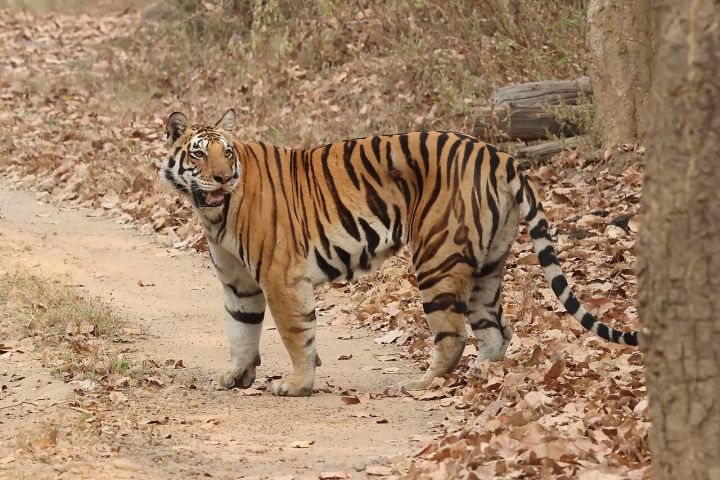
📷 Image: Wikimedia Commons / Bernard Gagnon
Local
Wild Buffaloes Return to Kanha Tiger Reserve After Century, Relocated by CM Dr. Yadav
✍️ Amar Ujala · Madhya Pradesh
🗓 11 Oct 2026, 09:36 PM
👁 10
After a century-long absence, wild buffaloes have been reintroduced to the Supkhar area of Kanha Tiger Reserve, with Chief Minister Dr. Yadav overseeing their transfer into a newly built enclosure.
The wildlife department of Madhya Pradesh announced that a herd of wild buffaloes has been moved to the Supkhar region of Kanha Tiger Reserve, marking their first appearance in the area in a hundred years. Chief Minister Dr. Yadav personally supervised the relocation, which took place in a specially constructed large enclosure designed to mimic the animals' natural habitat.
The enclosure, built on the periphery of the reserve, spans several hectares and is equipped with water sources, grazing patches, and protective fencing to ensure the buffaloes' safety from poaching and human‑wildlife conflict. The animals were captured from nearby forest fragments where a small, isolated population had survived.
Conservation officials said the reintroduction aims to restore the ecological balance of the reserve, where buffaloes historically played a crucial role in grassland maintenance and as prey for apex predators. The move is part of the state’s broader wildlife restoration program, which seeks to revive native species that disappeared due to habitat loss and hunting.
Monitoring teams will track the herd’s health and movement using GPS collars, and plans are underway to gradually allow the buffaloes to roam beyond the enclosure once they adapt to the environment. The initiative is expected to boost biodiversity and attract eco‑tourists to the region.
Local communities have been briefed on the project, with authorities emphasizing the importance of coexistence and the potential economic benefits from increased wildlife tourism.
The enclosure, built on the periphery of the reserve, spans several hectares and is equipped with water sources, grazing patches, and protective fencing to ensure the buffaloes' safety from poaching and human‑wildlife conflict. The animals were captured from nearby forest fragments where a small, isolated population had survived.
Conservation officials said the reintroduction aims to restore the ecological balance of the reserve, where buffaloes historically played a crucial role in grassland maintenance and as prey for apex predators. The move is part of the state’s broader wildlife restoration program, which seeks to revive native species that disappeared due to habitat loss and hunting.
Monitoring teams will track the herd’s health and movement using GPS collars, and plans are underway to gradually allow the buffaloes to roam beyond the enclosure once they adapt to the environment. The initiative is expected to boost biodiversity and attract eco‑tourists to the region.
Local communities have been briefed on the project, with authorities emphasizing the importance of coexistence and the potential economic benefits from increased wildlife tourism.