
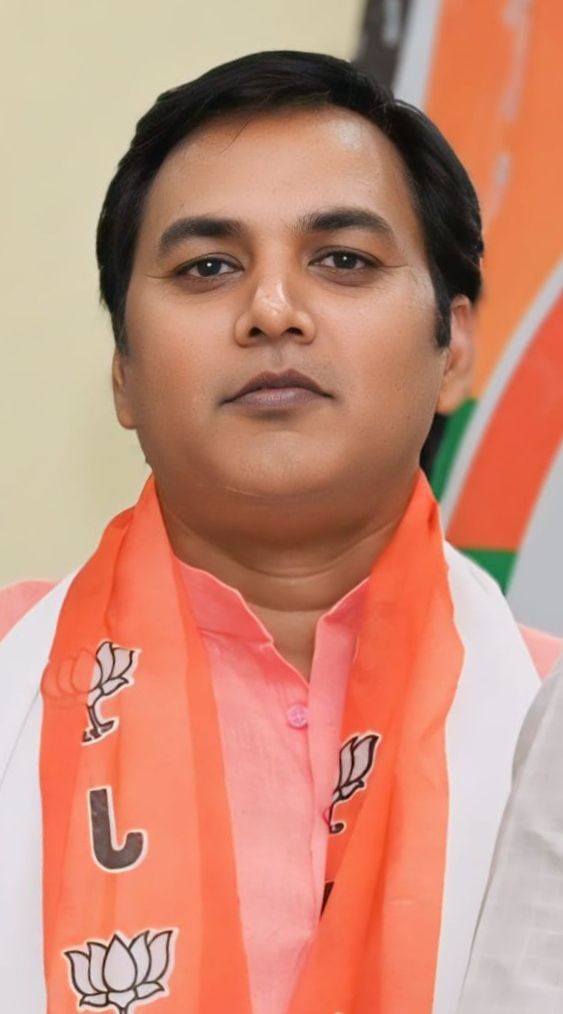
📷 Image: Wikimedia Commons / Santosh katai
Jobs & Career
UP Deputy CM Brajesh Pathak urges youth to drive e‑rickshaws instead of chasing jobs
✍️ The Economic Times
🗓 28 Sep 2026, 10:32 PM
👁 7
Deputy Chief Minister Brajesh Pathak told young people that seeking conventional jobs is less viable than taking up e‑rickshaw driving, highlighting it as a practical livelihood option.
Deputy Chief Minister Brajesh Pathak recently advised the youth of Uttar Pradesh to look beyond traditional job hunting and consider operating e‑rickshaws as a sustainable source of income. In his remarks, he emphasized that the e‑rickshaw sector is expanding rapidly and can provide immediate earnings without the prolonged search associated with conventional employment.
Pathak’s comments, reported by The Economic Times, reflect a broader push to promote low‑cost, electric mobility solutions in the state. He suggested that young entrepreneurs could benefit from the relatively low entry barriers and government incentives linked to electric vehicles.
While he did not provide specific figures, the deputy chief minister highlighted the potential for job creation within the e‑rickshaw ecosystem, including maintenance, charging infrastructure, and driver services. His unconventional advice aims to encourage self‑employment and reduce dependence on scarce formal job openings.
The statement comes at a time when Uttar Pradesh is seeking to boost green transport and generate employment opportunities for its large young population. Officials hope that such encouragement will translate into increased adoption of electric three‑wheelers across urban and semi‑urban areas.
Analysts note that the success of this approach will depend on the availability of financing, charging stations, and supportive policies, but Pathak’s call signals a shift toward pragmatic, locally‑driven livelihood solutions.
Pathak’s comments, reported by The Economic Times, reflect a broader push to promote low‑cost, electric mobility solutions in the state. He suggested that young entrepreneurs could benefit from the relatively low entry barriers and government incentives linked to electric vehicles.
While he did not provide specific figures, the deputy chief minister highlighted the potential for job creation within the e‑rickshaw ecosystem, including maintenance, charging infrastructure, and driver services. His unconventional advice aims to encourage self‑employment and reduce dependence on scarce formal job openings.
The statement comes at a time when Uttar Pradesh is seeking to boost green transport and generate employment opportunities for its large young population. Officials hope that such encouragement will translate into increased adoption of electric three‑wheelers across urban and semi‑urban areas.
Analysts note that the success of this approach will depend on the availability of financing, charging stations, and supportive policies, but Pathak’s call signals a shift toward pragmatic, locally‑driven livelihood solutions.