
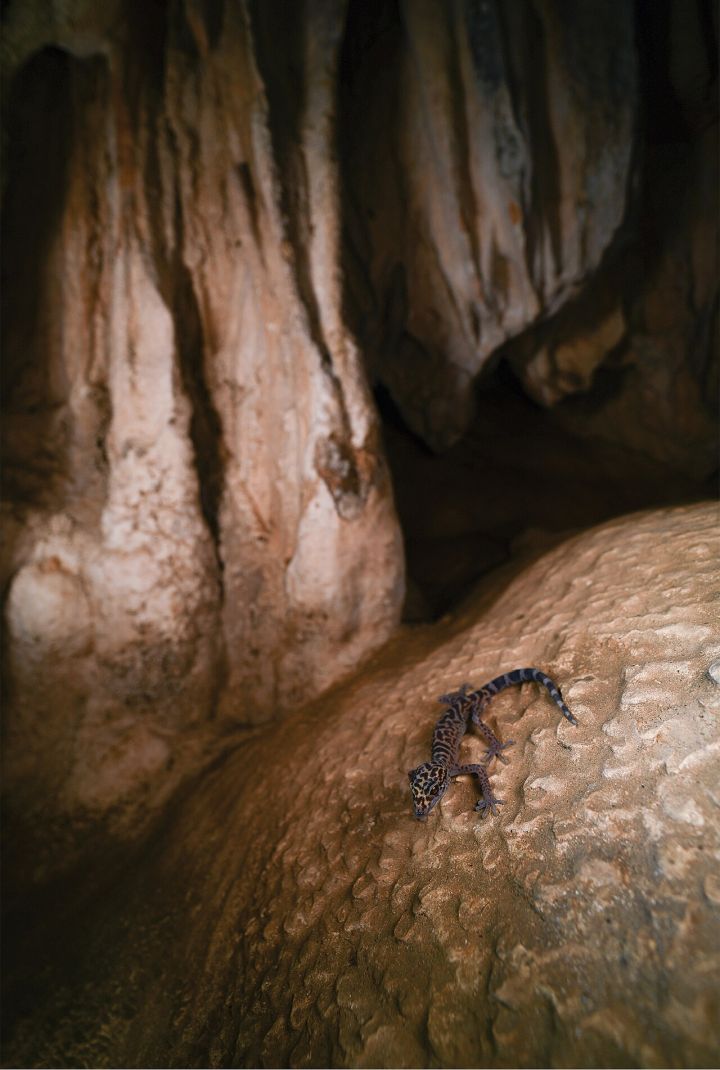
📷 Image: Wikimedia Commons / Qi S, Wang J, Grismer LL, Chen H-H, Lyu Z-T, Wang
Science
Two New Cave‑Dwelling Geckos Discovered in Meghalaya, Named After Khasi Heritage
✍️ Hub News
🗓 25 Nov 2026, 11:05 AM
👁 13
Researchers have identified two previously unknown cave‑dwelling gecko species in Meghalaya and have given them names that honor Khasi cultural heritage.
A team of herpetologists conducting field surveys in the limestone caves of Meghalaya announced the discovery of two previously undocumented gecko species. The reptiles were found inhabiting the dark, humid interiors of the caves, an environment that supports a unique assemblage of fauna.
Preliminary observations indicate that the new geckos possess distinct morphological traits that set them apart from known Indian cave‑dwelling species, suggesting they have evolved in isolation over long periods. Their presence adds to the growing list of endemic organisms that the region supports.
In a nod to the local Khasi community, the scientists have bestowed Khasi‑derived names on the species, reflecting the cultural heritage of the area where the animals were found. The naming underscores the link between biodiversity and indigenous traditions.
The discovery highlights the need for continued biological surveys in Meghalaya’s karst landscapes, which remain under‑explored despite their ecological importance. Conservationists say protecting these habitats is crucial for preserving such rare species.