
📷 Image: Wikimedia Commons / Julan Shirwod Nueva
Science
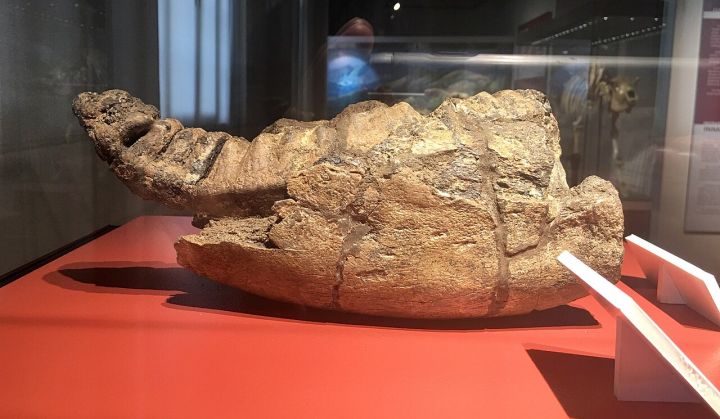
Prehistoric Stegodon Jaw Unearthed in Raisen, Madhya Pradesh
✍️ Bhaskar English
🗓 16 Nov 2026, 09:52 AM
👁 15
Archaeologists have uncovered a fossilized jaw of the extinct giant elephant, Stegodon, in Raisen district of Madhya Pradesh.
A team of archaeologists working in the Narmada basin reported the discovery of a fossilized jaw belonging to Stegosdon, an extinct genus of giant elephants, at a site in Raisen district, Madhya Pradesh. The find was made during systematic excavations aimed at mapping the region's prehistoric fauna.
Stegosdon lived during the Pleistocene epoch and was considerably larger than today’s Asian elephant, with some estimates suggesting a height of up to four metres. The jaw, measuring several centimeters in length, bears the characteristic elongated molars that distinguish the genus from other proboscideans.
Scientists say the specimen provides valuable insight into the distribution of megafauna across central India during the last ice age. Further analysis, including radiometric dating, is planned to establish the exact age of the fossil and to compare it with similar finds from the Narmada valley.
The jaw will be conserved and displayed at a regional museum, where it is expected to enhance public understanding of India’s deep natural history and attract further research interest in the area.