
📷 Image: Wikimedia Commons / Prime Minister's Office
International
PM Modi begins 4‑day tour of Uzbekistan and Kyrgyzstan to strengthen regional ties
✍️ Asianet Newsable
🗓 29 Aug 2026, 12:48 PM
👁 30
Prime Minister Narendra Modi arrived in Uzbekistan on a four‑day trip that will also include Kyrgyzstan, aiming to deepen economic and strategic cooperation in Central Asia.
Prime Minister Narendra Modi landed in Tashkent on Monday, marking the start of a four‑day diplomatic tour that will cover Uzbekistan and Kyrgyzstan. The visit is framed as a push to deepen India’s engagement with Central Asian neighbours and to explore new avenues of trade, energy and security cooperation.
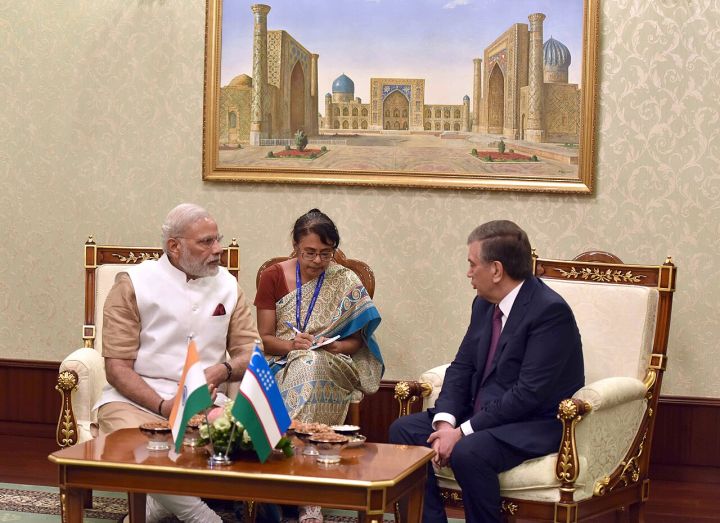
During his stay, Modi is scheduled to meet President Shavkat Mirziyoyev and senior Uzbek officials to discuss projects ranging from connectivity corridors to renewable‑energy partnerships. A joint declaration on “enhanced strategic partnership” is expected, with particular focus on digital infrastructure and agricultural trade.
The itinerary will then move to Bishkek, where the prime minister will hold talks with President Sadyr Japarov. Both leaders are likely to review regional security issues, including counter‑terrorism and the stability of the Afghanistan corridor, while also seeking to expand people‑to‑people contacts through cultural and educational exchanges.
Analysts view the trip as part of India’s broader “Act East” and “Neighbourhood First” strategies, seeking to balance China’s growing influence in the region and to secure reliable energy supplies for India’s growing demand.
During his stay, Modi is scheduled to meet President Shavkat Mirziyoyev and senior Uzbek officials to discuss projects ranging from connectivity corridors to renewable‑energy partnerships. A joint declaration on “enhanced strategic partnership” is expected, with particular focus on digital infrastructure and agricultural trade.
The itinerary will then move to Bishkek, where the prime minister will hold talks with President Sadyr Japarov. Both leaders are likely to review regional security issues, including counter‑terrorism and the stability of the Afghanistan corridor, while also seeking to expand people‑to‑people contacts through cultural and educational exchanges.
Analysts view the trip as part of India’s broader “Act East” and “Neighbourhood First” strategies, seeking to balance China’s growing influence in the region and to secure reliable energy supplies for India’s growing demand.