
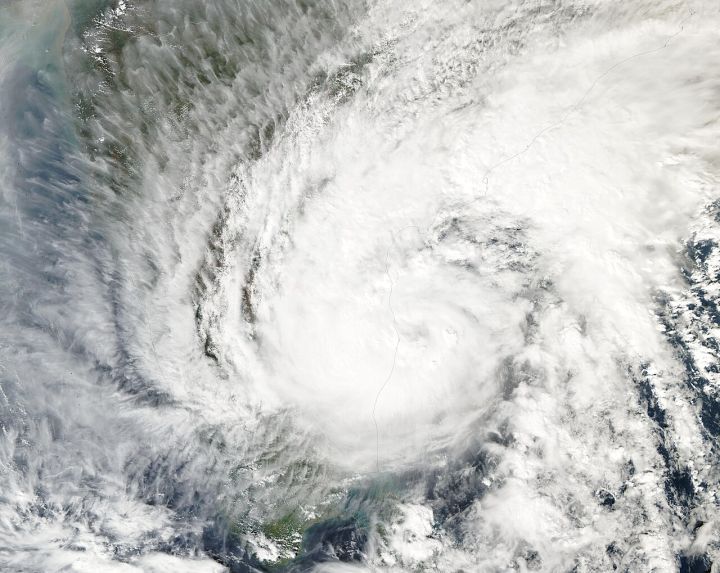
📷 Image: Wikimedia Commons / MODIS Land Rapid Response Team, NASA GSFC
Weather
New Cyclone Expected to Move Towards Andhra Pradesh, Odisha Braces for Heavy Rains
✍️ The New Indian Express
🗓 16 Nov 2026, 09:11 AM
👁 26
The India Meteorological Department has identified a fresh cyclonic system that is projected to head for Andhra Pradesh, with Odisha likely to receive heavy rainfall as it tracks inland.
The India Meteorological Department (IMD) has reported the formation of a new cyclonic disturbance in the Bay of Bengal. Forecast models indicate that the system will move north‑westward and is expected to approach the coastline of Andhra Pradesh within the next 48 hours.
While the cyclone’s core is anticipated to affect Andhra Pradesh, the IMD has also warned that adjoining Odisha could experience significant rainfall as the outer bands of the system drift over the state. Meteorologists expect the showers to be widespread, raising concerns of localized flooding in low‑lying areas.
State authorities in both Andhra Pradesh and Odisha have begun issuing precautionary advisories. Coastal districts are being urged to secure property, and disaster‑management teams are on standby to respond to any emergencies that may arise.
Residents are advised to stay updated through official channels, avoid unnecessary travel along vulnerable coastal routes, and follow any evacuation orders should the situation deteriorate.