
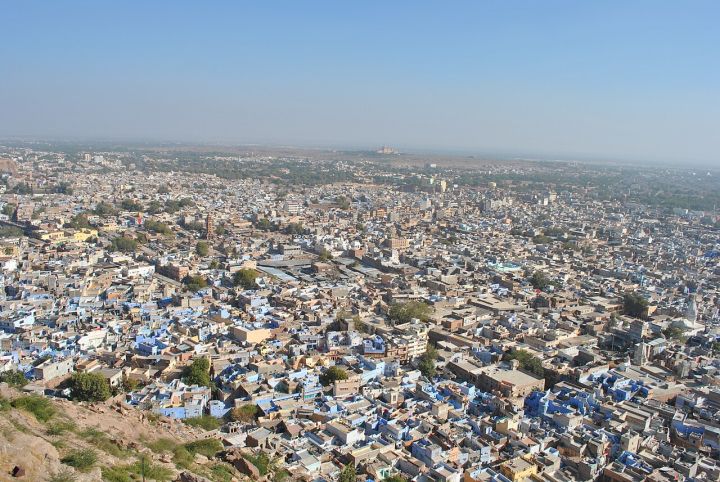
📷 Image: Wikimedia Commons / Schwiki
Science
Jodhpur's 750‑million‑year‑old Meherangarh Fort to become India's first UNESCO Global Geopark
✍️ Amar Ujala · Jodhpur
🗓 04 Oct 2026, 12:30 PM
👁 12
The Meherangarh Fort in Jodhpur, perched on a 750‑million‑year‑old rock formation, is set to be designated as India’s inaugural UNESCO Global Geopark after completion of academic studies and project planning.
Jodhpur’s historic Meherangarh Fort, which crowns a rock formation estimated to be 750 million years old, has entered the final phase of a project to secure UNESCO Global Geopark status – a first for India. The initiative aims to protect the geological heritage of the site while promoting sustainable tourism and scientific research.
The Meherangarh Museum Trust, in collaboration with the INTEK project team, has completed the required academic and field studies that document the area's unique lithology, paleontological records, and geomorphological features. These studies satisfy UNESCO’s criteria for a Global Geopark, which demand rigorous scientific validation and community involvement.
With the research phase concluded, the next steps involve submitting a formal nomination dossier to UNESCO’s International Geosciences and Geoparks Programme. Officials anticipate that, if approved, the geopark will attract scholars, students, and visitors, generating economic benefits for the region while fostering conservation awareness.
Local authorities and heritage bodies are also preparing interpretive centers and guided‑tour infrastructure to ensure that the geopark’s educational potential is fully realized, positioning Jodhpur as a leading destination for geotourism in India.
The Meherangarh Museum Trust, in collaboration with the INTEK project team, has completed the required academic and field studies that document the area's unique lithology, paleontological records, and geomorphological features. These studies satisfy UNESCO’s criteria for a Global Geopark, which demand rigorous scientific validation and community involvement.
With the research phase concluded, the next steps involve submitting a formal nomination dossier to UNESCO’s International Geosciences and Geoparks Programme. Officials anticipate that, if approved, the geopark will attract scholars, students, and visitors, generating economic benefits for the region while fostering conservation awareness.
Local authorities and heritage bodies are also preparing interpretive centers and guided‑tour infrastructure to ensure that the geopark’s educational potential is fully realized, positioning Jodhpur as a leading destination for geotourism in India.