
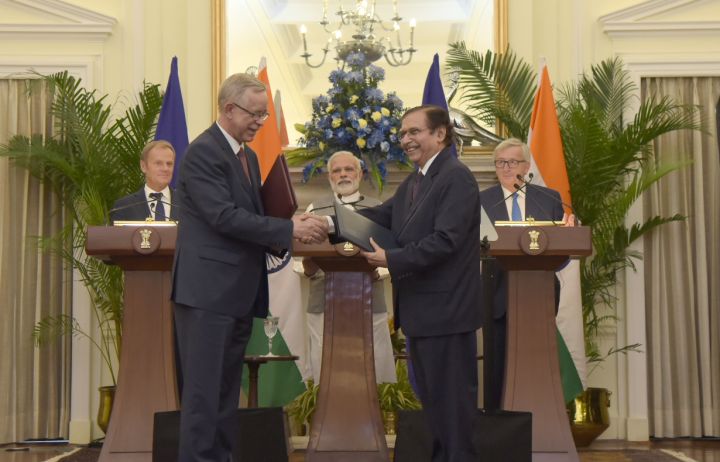
📷 Image: Wikimedia Commons / Prime Minister's Office
Business
Indian Exporters Told to Ready for EU Rules Ahead of New Trade Pact
✍️ Asianet Newsable
🗓 30 Nov 2026, 12:01 AM
👁 36
Industry bodies have urged Indian exporters to align with upcoming European Union standards as a fresh trade agreement between the two sides nears completion.
Indian exporters have been cautioned to start adapting to the European Union's forthcoming regulatory framework, which is expected to be incorporated into the next India‑EU trade pact. Trade experts say the upcoming agreement will tighten compliance requirements on product standards, sustainability and customs procedures, making early preparation essential for maintaining market access.
The advisory comes from a coalition of export promotion councils and chambers of commerce, which have highlighted that many Indian firms still rely on legacy processes that may not meet the EU's evolving criteria. They recommend that exporters conduct gap analyses, upgrade certification processes and engage with EU counterparties to understand the specific changes.
Officials note that the EU remains a key destination for Indian goods, especially in sectors such as textiles, pharmaceuticals and engineering products. Aligning with the new rules is seen as a way to safeguard export volumes and avoid potential trade disruptions once the pact is ratified.
While the exact timeline for the rulebook's implementation is yet to be disclosed, the message is clear: proactive compliance will give Indian businesses a competitive edge in the European market.