
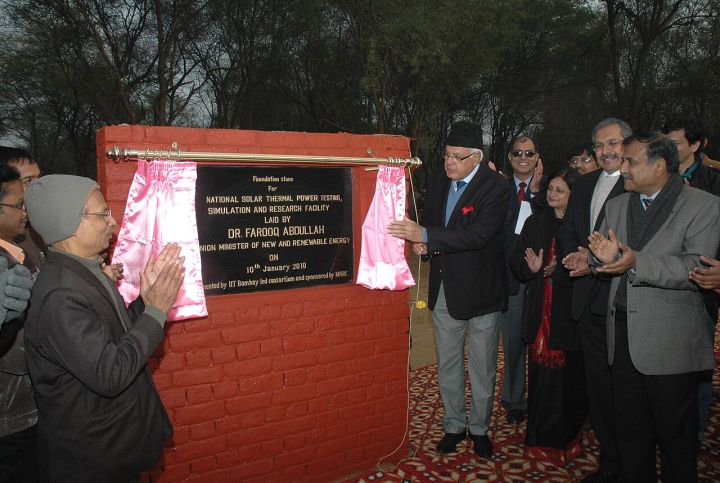
📷 Image: Wikimedia Commons / Ministry of New and Renewable Energy, Government o
Agriculture
Haryana Approves ₹402 Crore Solar-Powered Micro-Irrigation Scheme in Four Districts
✍️ DD News
🗓 06 Sep 2026, 08:33 PM
👁 39
The state government has cleared a ₹402 crore project to install solar-driven micro‑irrigation systems across four districts, aiming to boost water efficiency for farmers.
Haryana’s cabinet gave the green light to a ₹402 crore initiative that will deploy solar‑powered micro‑irrigation infrastructure in four districts of the state. The scheme is designed to replace conventional diesel‑run pumps with renewable‑energy based units, thereby reducing both electricity costs and carbon emissions.
The project will be executed under the state’s broader push for sustainable agriculture, targeting small and marginal farmers who rely heavily on groundwater. By delivering precise water doses directly to crops, the micro‑irrigation systems are expected to improve yields while conserving scarce water resources.
Implementation will be overseen by the Department of Agriculture, which will coordinate with local bodies to ensure timely installation and farmer training. The government has earmarked the full amount for procurement, installation, and capacity‑building activities, with an anticipated rollout over the next 12 months.
If successful, the initiative could serve as a model for other states seeking to blend renewable energy with modern farming practices, aligning with India’s national goals of water security and clean energy transition.
The project will be executed under the state’s broader push for sustainable agriculture, targeting small and marginal farmers who rely heavily on groundwater. By delivering precise water doses directly to crops, the micro‑irrigation systems are expected to improve yields while conserving scarce water resources.
Implementation will be overseen by the Department of Agriculture, which will coordinate with local bodies to ensure timely installation and farmer training. The government has earmarked the full amount for procurement, installation, and capacity‑building activities, with an anticipated rollout over the next 12 months.
If successful, the initiative could serve as a model for other states seeking to blend renewable energy with modern farming practices, aligning with India’s national goals of water security and clean energy transition.