
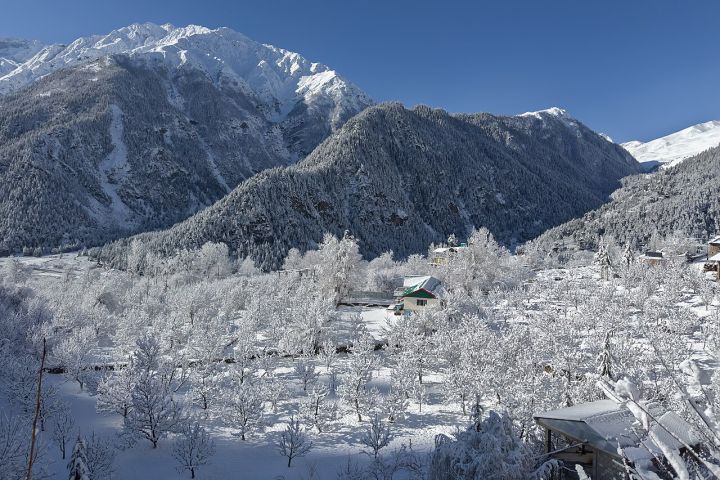
📷 Image: Wikimedia Commons / UnpetitproleX
Agriculture
Climate Shifts Threaten Himachal's Apple Economy via Changing Snowfall
✍️ Outlook India
🗓 20 Nov 2026, 09:39 AM
👁 16
Rising temperatures and altered snowfall patterns in Himachal Pradesh are disrupting the blooming cycle of apple trees, posing a significant threat to the state's agricultural economy.
The apple industry in Himachal Pradesh, a cornerstone of the state's rural economy, is facing unprecedented challenges due to shifting climatic conditions. Recent trends indicate that rising temperatures in the hilly regions are altering the traditional snowfall patterns that apple orchards depend on for healthy growth.
Apple trees require a specific period of cold temperatures, known as chill hours, to break dormancy and bloom effectively. However, the warming hills are reducing these critical cold periods, leading to irregular flowering and potential reductions in fruit set. This disruption in the natural cycle is causing anxiety among farmers who rely on apple cultivation for their primary income.
The economic implications of these environmental changes are significant. As the state is a major contributor to India's apple production, any decline in yield or quality due to climate instability could have ripple effects on local markets and national supply chains. Agricultural experts are closely monitoring these developments to assess the long-term viability of apple farming in the region.
Farmers in key apple-growing districts are reporting early signs of stress in their orchards, with some noting that the timing of the bloom is no longer aligning with historical averages. This shift underscores the urgent need for adaptive agricultural practices to mitigate the risks posed by climate change to the state's horticultural sector.