
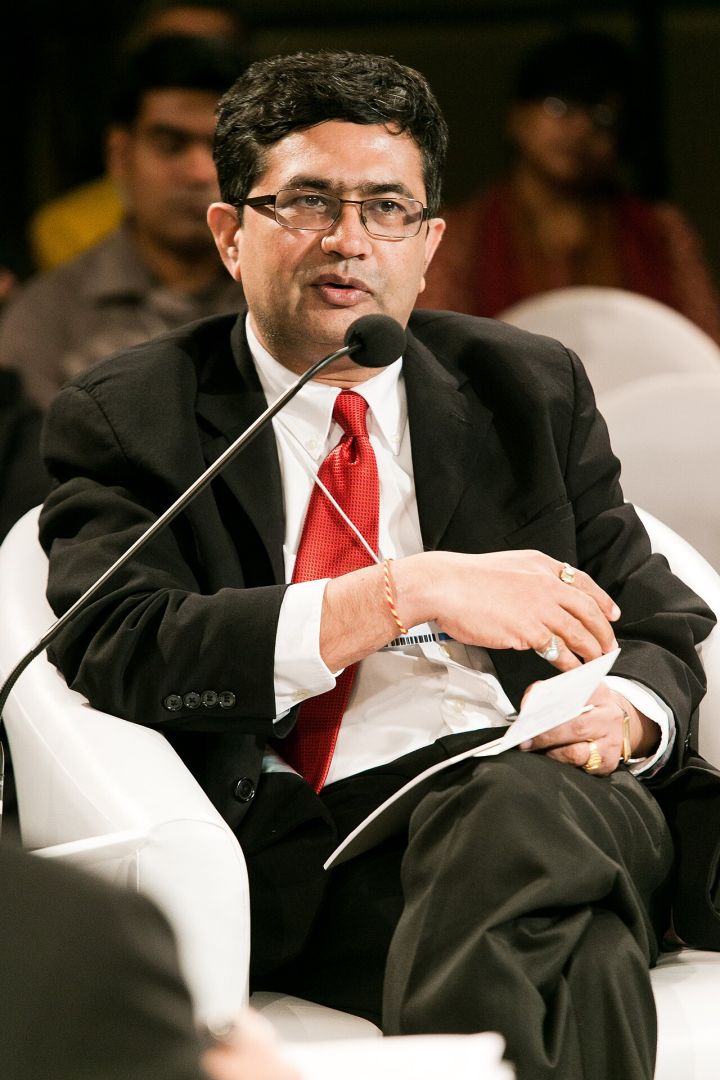
📷 Image: Wikimedia Commons / World Economic Forum from Cologny, Switzerland
Business
Ashishkumar Chauhan says Uttar Pradesh's next big firms will emerge from smaller cities
✍️ ET Government
🗓 01 Nov 2026, 05:57 AM
👁 24
NSE chief Ashishkumar Chauhan predicts that Uttar Pradesh's future corporate giants will originate from its tier‑2 and tier‑3 cities, citing demographic strength and improving infrastructure.
National Stock Exchange chief Ashishkumar Chauhan told ET Government that the next wave of large‑scale enterprises in Uttar Pradesh is likely to come from the state's smaller urban centres rather than the traditional metros. He pointed to the state's youthful population, expanding road and digital connectivity, and state‑level policy incentives as key drivers.
Chauhan emphasized that tier‑2 and tier‑3 cities such as Agra, Varanasi, and Allahabad are witnessing rising entrepreneurial activity, supported by a growing pool of skilled workers and better access to financing. He suggested that investors are increasingly looking beyond Lucknow and Noida to tap into untapped markets.
The remarks align with a broader national trend of business decentralisation, where companies seek cost‑effective locations while still accessing large consumer bases. If the forecast holds, Uttar Pradesh could see a reshaping of its industrial landscape over the coming decade.
Industry analysts note that the state's infrastructure projects, including logistics hubs and smart city initiatives, could further accelerate this shift. However, they caution that sustained policy support and skill development will be essential to realise the potential.
Chauhan concluded that the combination of demographic advantage and proactive governance positions Uttar Pradesh to become a cradle for India's next generation of corporate leaders.